
By Ansarul Karim Jamee
First published: May 14, 2026
Ansarul Karim Jamee holds master’s degrees in Environmental Science and Management, History, and Business Administration. For over two decades, he has worked to advance sustainability, well-being, and systems awareness across diverse industries.
LinkedIn:https://www.linkedin.com/in/ansarul-karim-jamee-6a554116/
Academia.edu:https://independent.academia.edu/AnsarulKarimJamee
ORCID:https://orcid.org/0009-0004-3714-147X
To learn more about the author, visit the HealthGodzilla homepage:https://healthgodzilla.com/
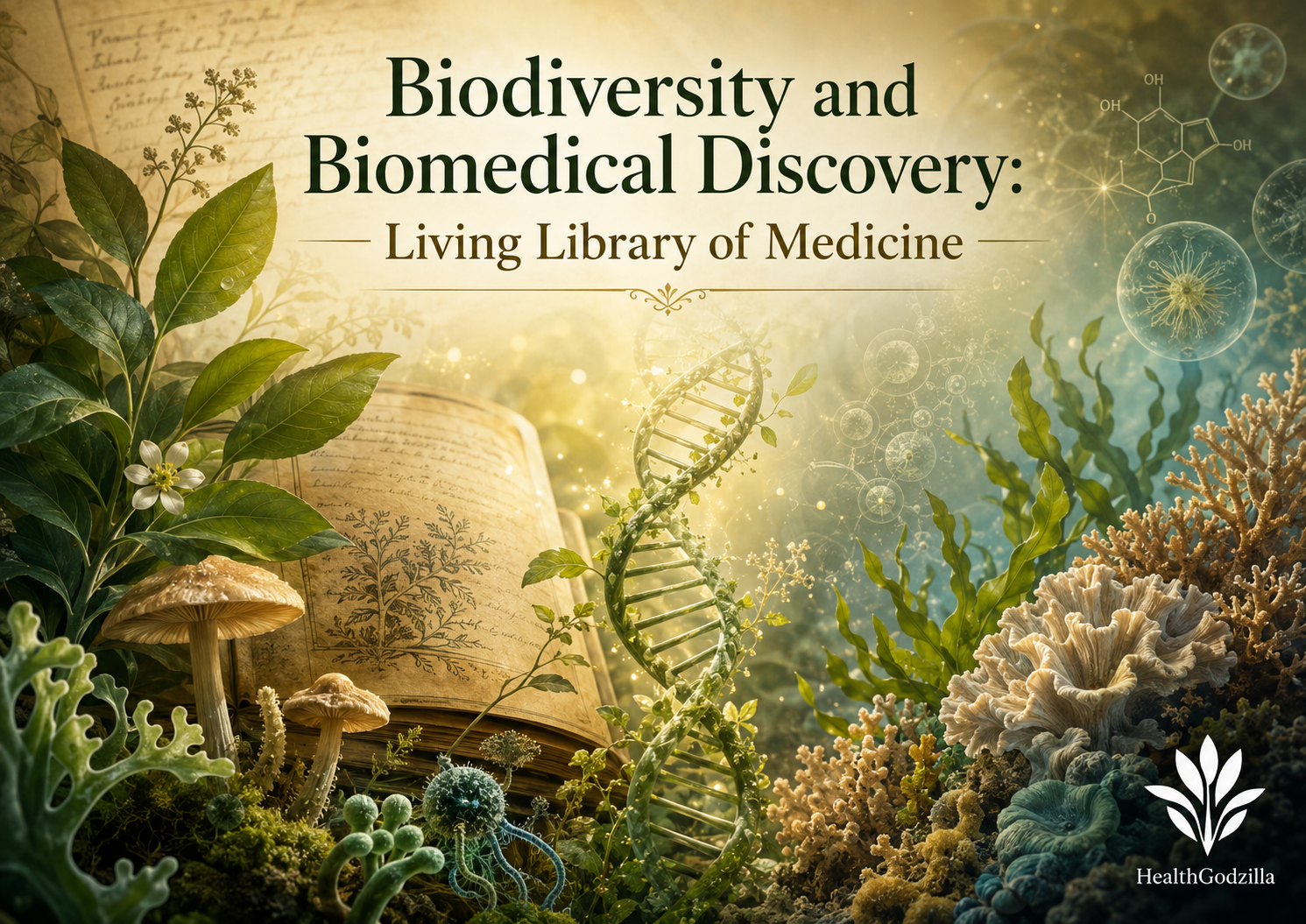
Biodiversity and Biomedical Discovery explores how the living world has shaped medicine, memory research, antibiotics, genetic science, traditional healing, and public health. For example, fungi gave us antibiotics. Likewise, sea hares helped scientists understand memory. Moreover, hot-spring bacteria transformed DNA research. Meanwhile, plants, algae, and microbes still hold unknown chemical possibilities. Together, they reveal biodiversity as a living library of medicine.
However, this article also asks a sharper question: what happens when species disappear before science learns their names, their molecules, their methods, or their quiet gifts? Therefore, biodiversity loss is not only an environmental concern. Instead, it may erase future cures, weaken public health, and narrow humanity’s imagination. Ultimately, this story looks at conservation not as sentiment, but as a public health imperative—an act of protecting the unfinished medicine of the Earth.
Biodiversity and Biomedical Discovery: A Living Library
Biodiversity means the variety of life on Earth, including genes, species, ecosystems, and the relationships among them. In biomedical discovery, biodiversity matters because living organisms often carry chemical compounds, genetic traits, and ecological interactions that can help scientists understand disease, healing, and resilience.
Biodiversity and Biomedical Discovery: The Living Library Opens
When Life Healed Before We Thanked It
The forest does not wear a white coat. The coral reef does not speak in laboratory language. The bacterium in a hot spring does not know that one day it may help humanity copy DNA. Yet, again and again, life has healed us before we learned how to thank it.
Biodiversity and Biomedical Discovery begins here, in this strange humility. Medicine did not rise from human intelligence alone. Instead, it grew from a long conversation between people and the living world—between wounds and leaves, fever and bark, infection and mold, memory and sea creatures, genes and heat-loving microbes. In other words, medicine has always had more than one author.
Biodiversity Is a Living Library
Biodiversity is not a warehouse of useful parts. Rather, it is a living library. Some books have roots. Others breathe through gills. A few bloom in darkness. Still others hide inside soil, skin, stomachs, rivers, algae, fungi, and old forests. Meanwhile, many remain unread because science has not yet learned their language.
A plant may carry a molecule that calms inflammation. A fungus may hold the beginning of an antibiotic. A marine snail may offer a clue about pain. A sea hare may open a window into memory. A bacterium from boiling water may change genetic research forever. Therefore, every species is not simply a name in a catalog; it may be a sentence in Earth’s unfinished medical manuscript.
The Unread Books Are Disappearing
However, this library is not safe. Shelves are burning quietly. Habitat loss, pollution, climate change, overharvesting, invasive species, and careless development are thinning the pages. As a result, some species vanish before anyone studies their chemistry, their behavior, their partnerships, or their ancient tricks of survival.
This is the wound at the center of the story. When biodiversity disappears, humanity does not lose only beauty. It may lose future medicines, research models, genetic tools, microbial wisdom, and forms of healing still hidden from modern science. Moreover, it may lose ways of thinking that no machine can easily replace.
Entering the Library Softly
So, this article does not treat nature as raw material waiting for human use. Instead, it walks through biodiversity as a conversation older than hospitals and deeper than patents. After all, the living world is not silent. It has been speaking through molecules, memories, enzymes, toxins, pigments, poisons, symbiosis, and resilience for billions of years.
Perhaps, our task is not to conquer that library. Perhaps, it is to enter softly, read honestly, share fairly, and protect the shelves before the unread books turn to ash.
Why Biodiversity and Biomedical Discovery Matter to Human Health
Biodiversity as Public Health Infrastructure
Biodiversity and Biomedical Discovery matter because human health does not stand apart from the living world. Instead, it depends on forests, wetlands, oceans, soils, microbes, plants, animals, and the invisible relationships among them. Clean air, fresh water, nutritious food, fertile soil, disease regulation, climate stability, and natural medicines all rise from functioning ecosystems. Therefore, biodiversity is not a distant environmental concern; it is part of the quiet infrastructure of public health.
A healthy ecosystem does many things before we notice it. For example, forests help regulate climate and air quality. Wetlands filter water like patient kidneys of the land. Pollinators support food crops, while soil organisms help maintain fertility. Meanwhile, diverse ecosystems can reduce the chance that one harmful organism dominates the whole stage. In this way, biodiversity helps keep life balanced before hospitals, clinics, and pharmacies enter the story.
Research Organisms and Model Species
Biomedical discovery also depends on the living world. For instance, scientists study organisms not only to find useful compounds, but also to understand how life works. These research organisms—often called model species—help make hidden biological processes visible. A plant may reveal a medicinal molecule. A fungus may lead to an antibiotic. A sea creature may help explain nerves, pain, or memory. A microbe may offer an enzyme that changes genetic science. Moreover, model species often allow researchers to ask questions that human bodies alone cannot easily answer.
When Extinction Closes Medical Doors
This is why biodiversity loss carries a medical warning. When species vanish, humanity may lose more than ecological beauty. It may lose natural compounds, research models, genetic clues, microbial partnerships, and traditional knowledge connected to local landscapes. In other words, extinction can close doors in medicine before anyone knows those doors existed.
So, biodiversity supports human health in two connected ways. It helps keep ecosystems stable enough for people to live well. At the same time, it provides the living knowledge that medicine uses to understand disease, healing, adaptation, and survival. Ultimately, biodiversity is not only around us; it is inside the long story of how humanity learns to stay alive.
Penicillin, Microbes, and the First Whisper of Biomedical Discovery
Before the Laboratory Spoke Loudly
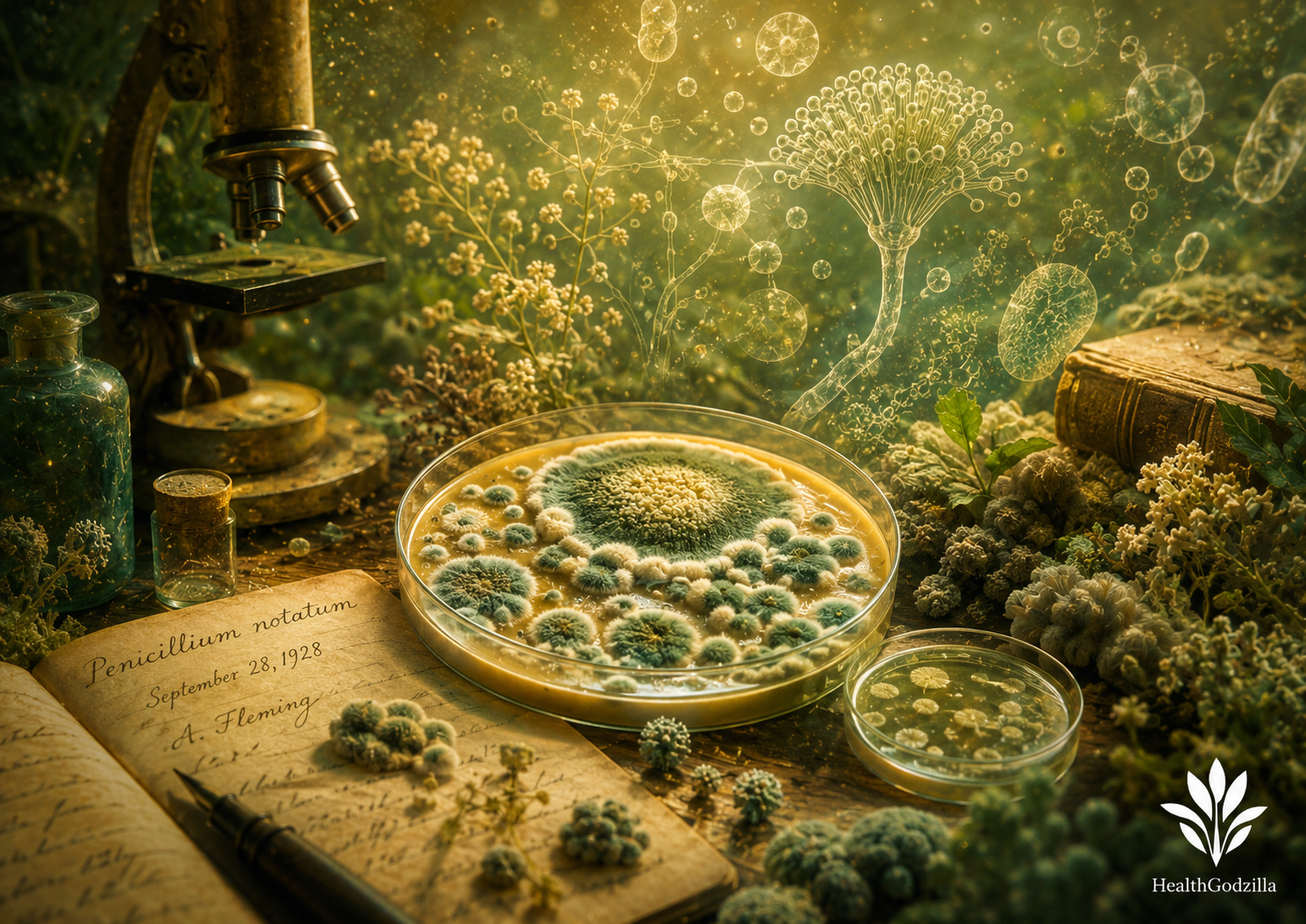
Before the laboratory spoke loudly, the mold had already begun its quiet work. Long before humanity could name molecules with confidence, microorganisms were making chemical tools in soil, water, plants, wounds, and hidden ecological corners. Then, science arrived with its glassware, questions, and disciplined curiosity. It did not invent the magic from nothing. Instead, it learned to notice what life had already prepared.
Penicillin became one of the great turning points in modern medicine. Before antibiotics, infections such as pneumonia could move through human life like a dark wind. A small cut, a fever, or a bacterial infection could become a sentence no family wanted to hear. However, with penicillin and later antibiotics, medicine gained a new strength against bacterial disease. The age of antibiotics did not remove suffering from the Earth, but it changed the terms of survival.
Microbes as Medicine’s First Chemists
Microorganisms have shaped many major antibiotic classes. For example, fungi and bacteria produce compounds that can stop, weaken, or kill other microbes. In nature, these compounds are not made for human hospitals. Rather, they belong to the old ecological drama of competition, defense, territory, and survival. Microbes speak chemically. Sometimes, medicine learns to translate.
This is why biodiversity matters so deeply to biomedical discovery. When scientists study microorganisms, they are not only collecting tiny living things. They are entering an ancient chemical conversation. Soil microbes, fungi, marine organisms, and countless unseen species may carry molecules that human medicine has not yet imagined. Moreover, many important medicines have natural-product origins, reminding us that the pharmacy did not begin behind a counter. It began in the living world.
The Gift and the Warning
Yet, the story of antibiotics also carries a warning. Because antibiotics have been overused and misused, many bacteria have learned to resist them. Superbugs are not monsters from fiction; they are life responding under pressure. As a result, some infections have become harder to treat, and the search for new antibiotics has become urgent again.
Therefore, penicillin should not make us arrogant. It should make us humble. A mold once helped change medical history. A microbe once opened a door. Perhaps, many more doors still wait in forests, soils, oceans, wetlands, and organisms that remain unnamed. However, if biodiversity disappears, some of those doors may close before humanity even reaches the hallway.
Plants, Fungi, and the Old Medicine Bag of Humanity
The Traveler Beneath the Ice
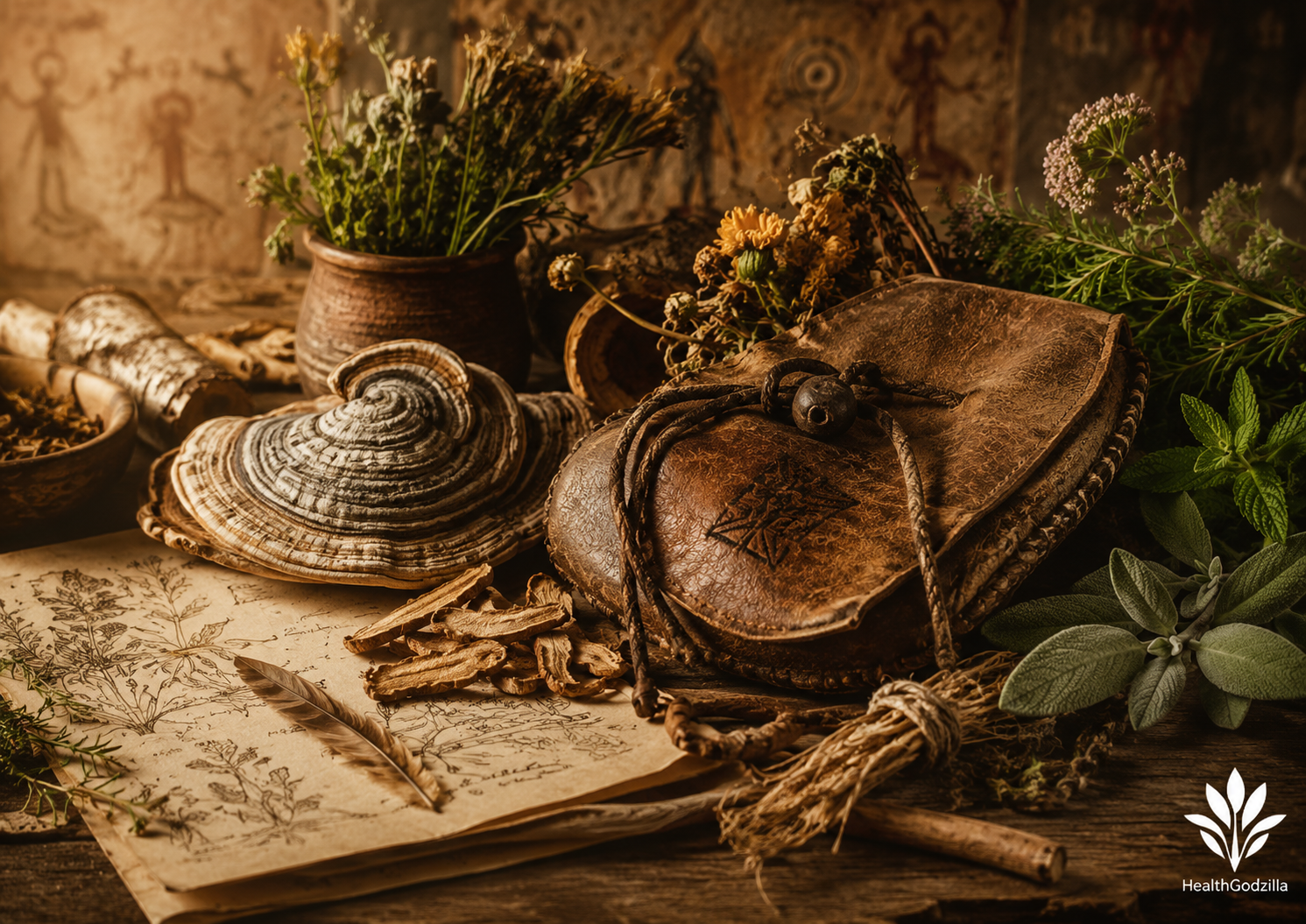
Long before modern pharmacies, people carried medicine in memory, ritual, trial, error, and landscape. For example, Ötzi, the ancient natural mummy found in the Alps, carried birch polypore fungus with him more than 5,000 years ago. Perhaps, he did not know its chemistry in the language of modern laboratories. Yet, he knew enough to carry it.
That small detail feels almost like a whisper from the deep past. A man crossed ice and stone with a fungus in his pouch. Therefore, medicine was not only something discovered later in glass rooms. It was also something walked with, gathered, tested, trusted, and remembered. The old medicine bag was not perfect, but it carried a relationship between human vulnerability and the living world.
Medicinal Plants and Human Memory
Plants have always stood close to human pain. Across cultures, leaves, bark, roots, seeds, resins, and flowers entered healing practices through observation and experience. Sometimes, they relieved discomfort. Sometimes, they failed. Still, they taught human beings to pay attention.
However, traditional medicine should not be treated like a romantic museum or a convenient shortcut for modern discovery. It belongs to communities, histories, ecosystems, and ways of knowing. Therefore, respect matters. If science learns from traditional knowledge, it must do so with consent, fairness, humility, and benefit-sharing. Otherwise, discovery can become extraction wearing a clean coat.
Natural Products and Modern Medicine
Modern medicine has also learned from nature through more formal scientific paths. For instance, many approved medicines have natural-product origins or were inspired by natural compounds. Plants, fungi, microbes, and animals have offered molecules that helped shape antibiotics, cancer treatments, pain relief, and other areas of medicine.
Moreover, natural products often carry chemical structures that human imagination alone might not easily design. Evolution has spent billions of years experimenting with defense, attraction, communication, survival, and repair. As a result, every forest, wetland, reef, grassland, and microbial world may contain chemical possibilities that science has not yet opened.
Not a Treasure Chest, but a Relationship
Still, biodiversity should not be seen merely as a treasure chest waiting for human hands. Instead, it should be understood as a relationship. A medicinal plant is not only a compound. A fungus is not only an extract. A forest is not only a laboratory with leaves. Rather, each belongs to a living system of soil, insects, water, climate, culture, and time.
So, the old medicine bag of humanity teaches a careful lesson. Nature has helped heal us, but it does not exist only to serve us. If we forget that, we may turn gratitude into greed. If we remember it, biomedical discovery can become something wiser: not a raid on the living world, but a respectful conversation with it.
A Sea Hare and the Mystery of Memory
A Small Creature, an Enormous Window
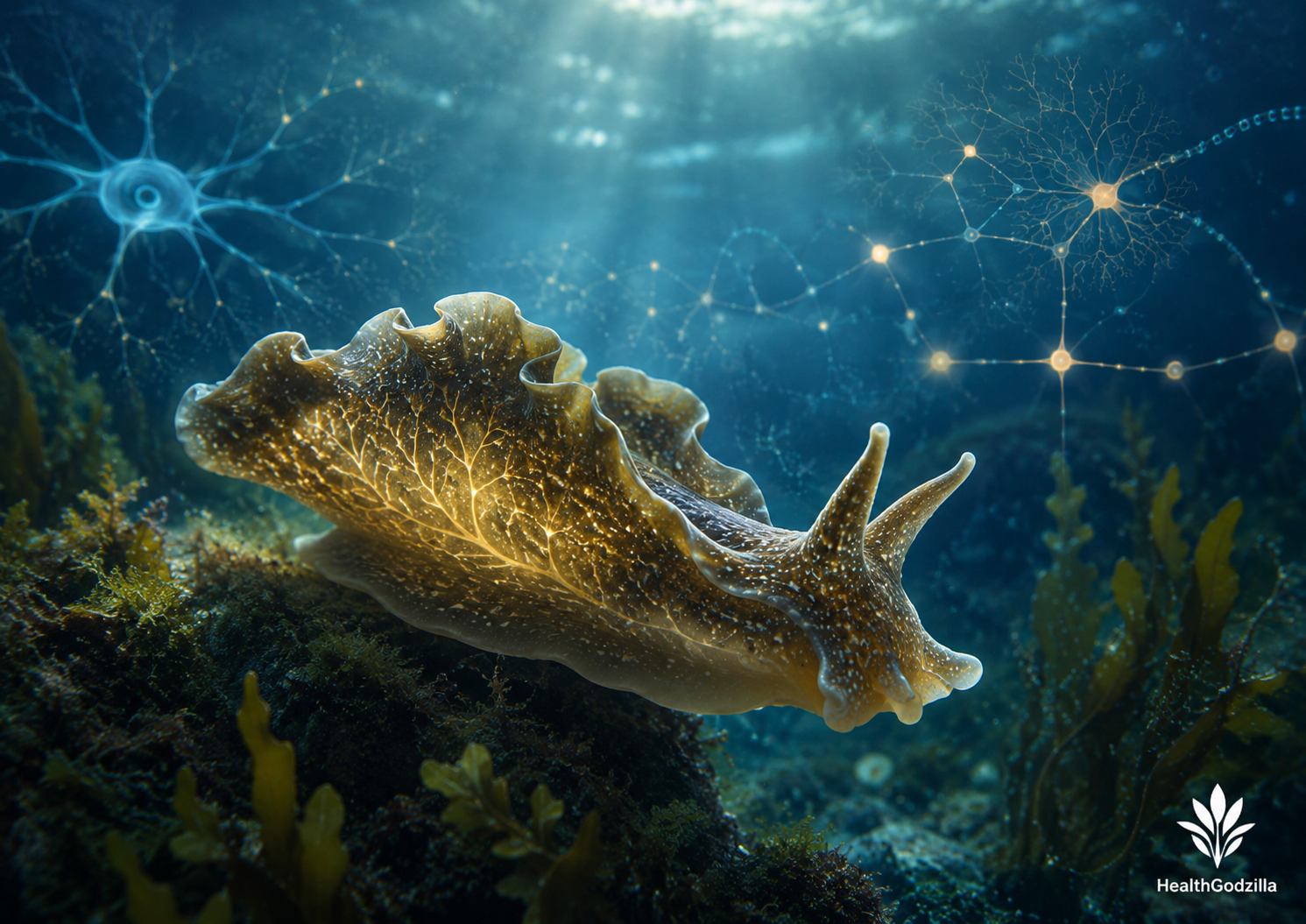
A sea hare does not look like a philosopher. Yet, in the quiet rooms of neuroscience, Aplysia helped scientists ask one of the oldest human questions: how does memory form? This soft marine creature, moving through water with ancient patience, became an unexpected doorway into the brain. In this way, Biodiversity and Biomedical Discovery became less abstract and more intimate: a small sea creature helped illuminate the human mind.
Eric Kandel’s memory research used Aplysia because its nervous system is much simpler than the human brain. Instead of billions of neurons, it has far fewer nerve cells, and some of them are large enough for scientists to study more easily. Therefore, what looked small in the sea became enormous in the laboratory.
How Aplysia Helped Memory Speak
Memory can feel mystical from the inside. A smell returns childhood. A song revives a lost afternoon. A fear learns to sit in the body. However, memory also has a cellular life. Neurons send signals, connections strengthen or weaken, and experience leaves traces in living tissue.
Through Aplysia, Kandel and other researchers could observe how nerve cells change during learning. As a result, scientists gained clearer insight into how short-term and long-term memory may form at cellular and molecular levels. The sea hare did not explain the whole human mind. Still, it helped illuminate one hidden corridor.
From Memory to Human Illness
This is where biodiversity and biomedical discovery become deeply human. Because Aplysia helped scientists understand learning and memory, it also opened paths toward studying disorders where memory, behavior, and the nervous system suffer. Alzheimer’s disease, addiction, and the lifelong effects of early trauma all involve changes in the brain’s ways of learning, remembering, responding, and adapting.
Of course, a sea hare is not a human being. Its nervous system cannot contain grief, poetry, regret, or the smell of a mother’s kitchen in the way a human mind does. Nevertheless, life often shares basic biological languages across species. A small marine organism can reveal a pattern that later helps science ask better questions about human suffering.
The Humility of Learning from Another Life
The lesson here is not that Aplysia exists for us. Rather, the lesson is that the living world holds forms of knowledge we cannot manufacture from arrogance. A creature without fame, without a face we easily remember, helped humanity understand memory itself.
So, when biodiversity declines, we should not imagine only the loss of beautiful animals in distant waters. We should also imagine the loss of teachers. Some may teach chemistry. Others may reveal genetic secrets. A few may help us understand immunity, pain, regeneration, or memory. Perhaps, many still wait quietly in the ocean’s blue classroom, carrying lessons we have not yet learned how to ask.
A Hot Spring Bacterium and the Alphabet of DNA
Life Where Life Was Not Expected
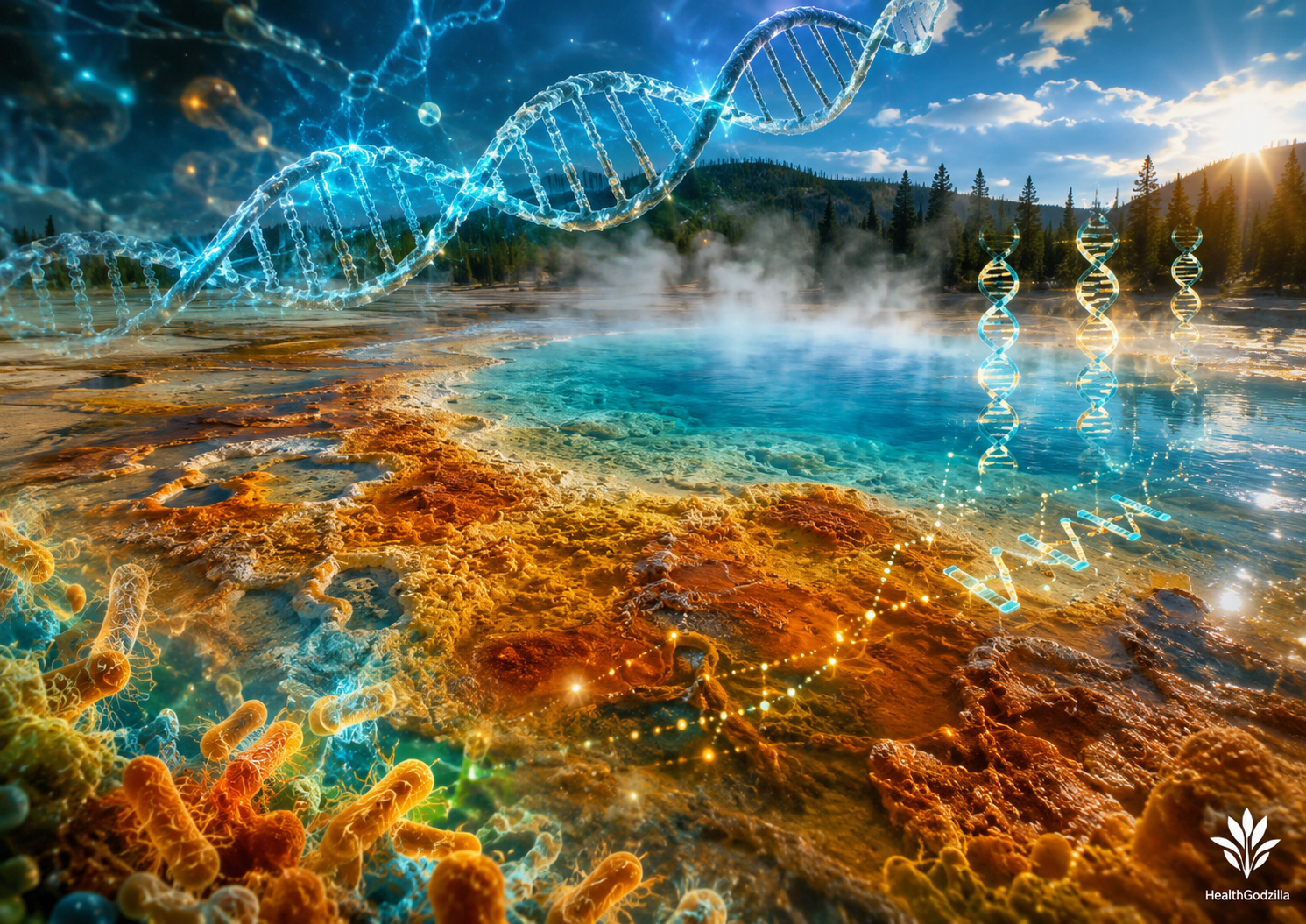
A hot spring looks like a place where life should hesitate. Steam rises. Minerals stain the rocks. Heat moves through the water like a warning. Yet, in Yellowstone National Park, scientists found a bacterium that did not fear such heat. Its name was Thermus aquaticus.
At first, this tiny organism may have seemed like a biological curiosity. After all, most cells cannot survive in such extreme temperatures. Human cells would suffer there. Many ordinary microbes would fail there. However, Thermus aquaticus had learned the old art of endurance. It lived where heat ruled the water.
Taq Polymerase and the Gift of Heat
Inside this bacterium, scientists found something extraordinary: Taq polymerase. This enzyme could copy DNA at high temperatures. Because of that unusual strength, it became essential for one of the most important tools in modern biology: the polymerase chain reaction, or PCR.
PCR allows scientists to make many copies of DNA from a small sample. In simple terms, it works like a biological photocopier. A tiny genetic trace can become enough material to study, test, compare, and understand. Therefore, a bacterium living in heat helped humanity read the cold alphabet of heredity.
PCR and Modern Genetic Research
The impact of PCR is difficult to overstate. Today, it supports genetic research, disease diagnosis, forensic science, evolutionary biology, infectious disease testing, and many areas of biomedical discovery. Moreover, it helps scientists detect genetic material that would otherwise remain too small, too faint, or too hidden to study.
In this way, Biodiversity and Biomedical Discovery becomes visible through one small bacterium and one powerful genetic tool.
This is one of the clearest examples of how biodiversity can change the direction of science. Thermus aquaticus was not famous. It did not bloom like a flower or sing like a bird. Still, it carried a molecular tool that helped transform modern genetics. In other words, the living library had placed a key inside boiling water.
The Smallest Teachers May Change the Largest Questions
The story of Thermus aquaticus reminds us that biomedical discovery does not always begin with large animals, medicinal forests, or dramatic plants. Sometimes, it begins with a microbe in a hot spring. Sometimes, it begins with an organism so small that human eyes cannot see it without help.
Therefore, biodiversity should never be measured only by beauty, size, or immediate usefulness. A species may look ordinary. It may live in mud, steam, salt, darkness, or decay. Yet, inside its body, there may be an enzyme, a molecule, or a survival strategy that changes science.
So, when we speak of protecting biodiversity, we are also speaking of protecting unknown languages. Some are written in leaves. Others hide in venom. A few speak through memory cells. And some, like Thermus aquaticus, are written in the heat-loving machinery of DNA itself.
Natural Antibiotics in the Age of Superbugs
When Old Weapons Begin to Fail
Antibiotics changed human history. However, their success also created a dangerous illusion: that bacterial infections had been permanently defeated. Bacteria did not accept that conclusion. They adapted, exchanged genetic tricks, survived pressure, and learned to resist medicines that once held them back.
Today, antimicrobial resistance has become one of the great health warnings of our time. Some bacteria can resist multiple drugs. Others survive treatment so stubbornly that physicians face fewer and fewer options. As a result, the old confidence around antibiotics has begun to crack. The miracle did not disappear, but it became more fragile.
At this point, Biodiversity and Biomedical Discovery become urgent, because the living world may still hold chemical strategies against resistant microbes.
This does not mean antibiotics failed humanity. Rather, it means humanity used them too carelessly, too widely, and sometimes too casually. Overuse, misuse, poor infection control, environmental contamination, and slow development of new antibiotics have all helped resistant microbes gain ground. Therefore, medicine now needs new tools, new molecules, and new ways of thinking.
Phytochemicals and Nature’s Many-Handed Defense
Here, biodiversity enters the story again. Plants, fungi, algae, microbes, and other living sources produce natural compounds that may help fight harmful microorganisms. For example, plants contain phytochemicals such as alkaloids, flavonoids, phenolics, terpenoids, tannins, essential oils, and other bioactive substances. Many of these compounds show antimicrobial or antibiofilm potential.
Conventional antibiotics often act like a single arrow aimed at a specific target. By contrast, many natural compounds may act more like a small orchestra. They can affect bacterial cell walls, membranes, proteins, metabolism, movement, communication, and survival strategies. In other words, nature often fights with many hands at once.
This multi-target behavior matters because bacteria may find it harder to develop resistance against several pressures at the same time. Moreover, some phytochemicals may work as helpers, making resistant bacteria more sensitive to conventional antibiotics. They may not replace antibiotics, but they may support them, sharpen them, or reduce the dose needed in certain treatment strategies.
Biofilms: The Microbial Fortresses
Bacteria do not always live as lonely wanderers. Sometimes, they gather, attach to surfaces, and build protective communities called biofilms. These biofilms can form on wounds, medical devices, tissues, pipes, industrial surfaces, and many other places. Once protected inside this matrix, microbes become much harder to kill.
A biofilm is not merely a crowd of bacteria. Rather, it is a fortress. Its walls can slow the entry of antimicrobial substances. Its hidden cells may grow slowly, resist stress, and survive attacks. Meanwhile, some bacteria inside the biofilm can behave like sleeping soldiers, waiting until the danger passes.
This is why biofilms make infections so difficult to treat. However, natural compounds from plants and other sources may help disturb these microbial fortresses. Some can interfere with bacterial communication, known as quorum sensing. Others may reduce adhesion, movement, or biofilm formation. Therefore, phytochemicals offer an important path for future antimicrobial research.
Algae, Propolis, and the Wider Search
The search does not end with land plants. Meanwhile, marine algae also produce compounds with antimicrobial potential. These organisms live in demanding environments, where they must defend themselves against microbes, stress, competition, and changing conditions. As a result, they may carry chemical strategies that medicine has only begun to understand.
Propolis offers another fascinating example. Bees gather resins and other plant materials, then transform them into a complex substance used to protect the hive. In a sense, propolis is a bee-made ecological pharmacy. It carries compounds shaped by plants, insects, enzymes, and environment. Therefore, it reminds us that medicine may arise not only from one organism, but from relationships among organisms.
Superbugs and the Living Library
The age of superbugs does not ask us to worship nature blindly. Instead, it asks us to study nature carefully, ethically, and humbly. Natural compounds still require testing, safety evaluation, proper dosing, and clinical evidence. However, they also remind us that biodiversity remains one of medicine’s deepest reservoirs of possibility.
Biodiversity and Biomedical Discovery meet sharply here. If resistant microbes are rewriting the rules of infection, then the living world may still hold unread chapters in response. Plants, algae, fungi, bees, bacteria, and marine organisms may not offer simple miracles. Still, they offer questions, clues, compounds, and strategies.
Therefore, Biodiversity and Biomedical Discovery should be understood not as a narrow scientific theme, but as a public health necessity in the age of superbugs.
Ultimately, the fight against superbugs may depend not only on inventing new weapons, but also on listening again to old teachers. A leaf may carry a chemical hint. A fungus may hold an antibiotic ancestor. A seaweed may hide an antimicrobial pattern. A hive may preserve a resinous defense. And perhaps, somewhere in the living library, a future medicine waits quietly—not as a trophy, but as a conversation we have not yet learned to finish.
Algae, Propolis, and the Wider Pharmacy of Life
The Sea Also Keeps Medicine
The living library does not end at the forest edge. Beyond roots, bark, fungi, and soil, the sea keeps its own shelves of medicine. Marine algae live in shifting worlds of salt, light, pressure, competition, and constant microbial contact. Therefore, they have learned chemical ways to survive.
Algae may look simple from a distance. However, they produce many bioactive compounds with antimicrobial potential. Some algae defend themselves against bacteria and fungi. Others carry substances that may help researchers study infection, inflammation, oxidative stress, and microbial resistance. In this way, the ocean becomes not only a blue wilderness, but also a vast biochemical manuscript.
Plant Compounds and Many Small Defenses
Plants, too, speak through chemistry. For example, leaves, roots, fruits, seeds, and resins may contain alkaloids, flavonoids, phenolics, tannins, essential oils, and other natural compounds. These substances help plants respond to insects, microbes, injury, and environmental stress. Meanwhile, medicine studies some of these compounds for their possible role against harmful microorganisms.
This does not mean every plant extract is a medicine. Rather, it means plants carry strategies shaped by long survival. Some compounds may weaken bacterial growth. Others may disturb biofilms, reduce microbial adhesion, or support conventional antibiotics. Moreover, their value often lies not in one heroic molecule, but in the way several compounds may work together.
Propolis: A Hive-Made Pharmacy
Then there is propolis, the golden-brown substance bees make from plant resins, waxes, and their own enzymatic touch. In a sense, propolis is not created by one life form alone. It is a collaboration between plants and bees, between flowers and hive, between landscape and instinct.
Bees use propolis to protect the hive. Similarly, humans have long noticed its protective qualities in traditional and complementary healing practices. Modern research has also examined its antimicrobial, antioxidant, antifungal, and antiviral potential. Still, propolis should not be treated as magic. It should be studied carefully, tested honestly, and understood in relation to its source, quality, and context.
A Pharmacy Made of Relationships
Algae, plant compounds, and propolis remind us that medicine does not always begin with a single organism. Often, it begins with relationships. The sea shapes algae. Soil shapes plants. Plants shape bee resins. Bees transform those resins into hive protection. As a result, healing possibilities may emerge from ecological conversations, not isolated ingredients.
Biodiversity and Biomedical Discovery become wider here. The living world is not one pharmacy with neat drawers. Instead, it is a moving, breathing network of chemical exchanges. Some happen in leaves. Others unfold in seaweed. A few gather in the dark warmth of a hive.
Ultimately, the wider pharmacy of life teaches humility. Nature does not hand us finished medicines with labels attached. Rather, it offers clues, patterns, defenses, and partnerships. Science must then ask carefully, test patiently, and remember that every useful compound comes from a living web that also deserves protection.
The Vanished Frog and the Biomedical Discovery Never Born
A Womb Inside the Stomach
Some stories of biodiversity loss arrive with noise: falling trees, burning forests, poisoned rivers, empty coral reefs. However, some arrive almost silently. A small frog disappears. A scientific question remains unfinished. A possibility folds itself into darkness.
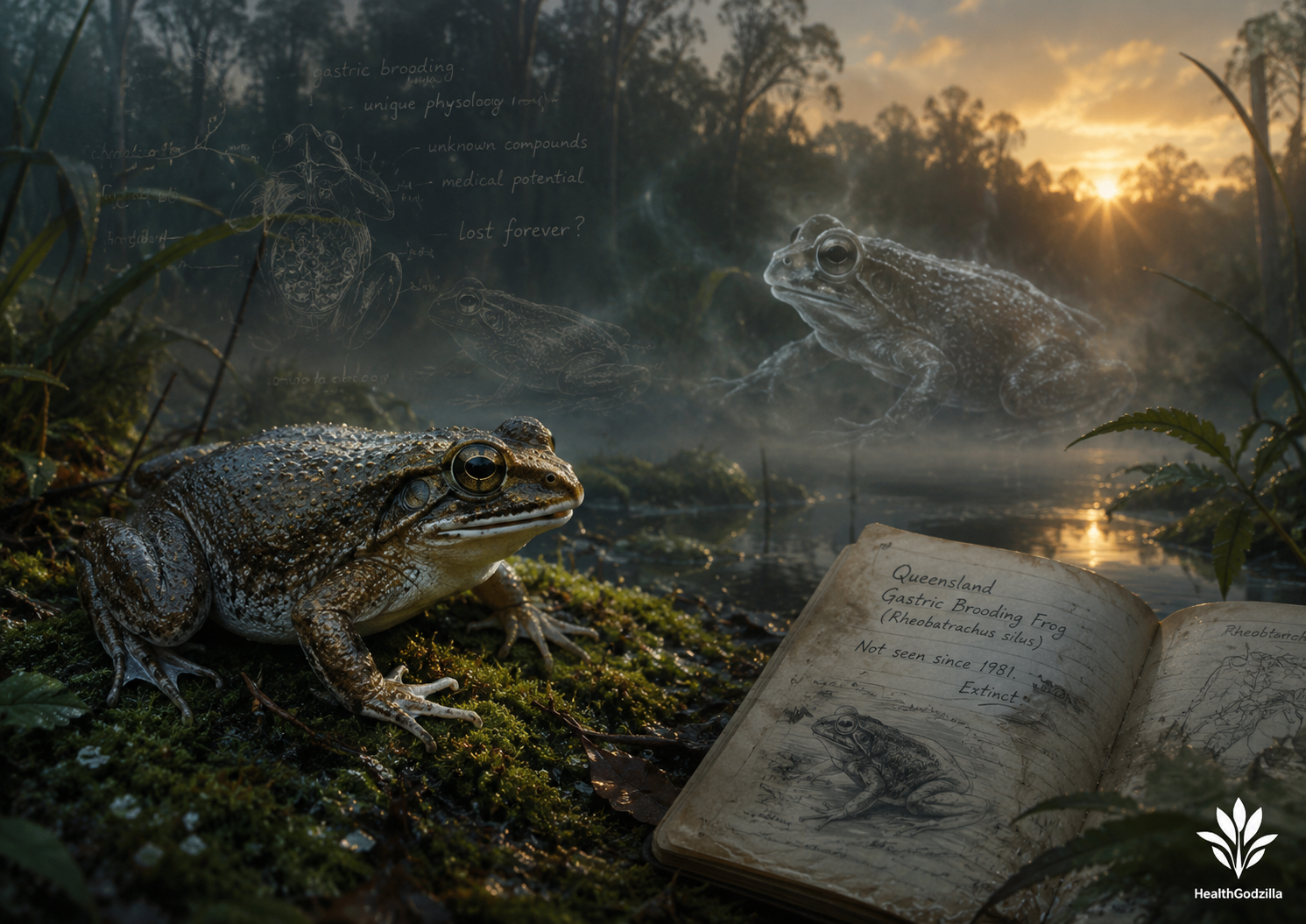
The gastric-brooding frogs of Queensland, Australia, carried one of the strangest reproductive mysteries known to science. Instead of laying eggs and leaving them to the usual hazards of water, they swallowed their fertilized eggs. Then, inside the stomach, the young developed. The mother’s stomach became a nursery, a hidden chamber of life.
This was not ordinary biology. Rather, it was a physiological wonder. A stomach normally breaks things down. It digests. It burns food into usable energy. Yet, in these frogs, the stomach somehow stopped behaving like a digestive furnace and became a living cradle.
The Question Science Could Not Finish
Scientists wanted to understand how this happened. After all, if a stomach could temporarily stop producing the acids and enzymes that normally digest food, then that mystery might teach medicine something valuable. It might offer clues about gastric regulation, acid control, inflammation, ulcers, and other stomach-related disorders.
Perhaps, the frogs carried a biological answer that could have helped researchers ask better questions about peptic ulcer disease and related conditions. We cannot say they would have produced a cure. That would be too easy, too loud, and too unfair to the truth. Still, we can say they carried knowledge that science had barely begun to understand.
In this way, Biodiversity and Biomedical Discovery becomes a story not only of what we found, but also of what vanished before we could listen.
Extinction as an Unanswered Letter
Then the frogs vanished. The two known gastric-brooding frog species disappeared in the 1980s. As a result, their strange reproductive physiology disappeared with them. No farewell came. No final explanation followed. Only the laboratory table remained—without a last note.
This is why extinction can feel like an unanswered letter. When a species disappears, it does not tell us what it carried. It does not say, “Here is the molecule you missed.” Nor does it whisper, “Here is the pathway that might have helped.” Instead, it simply leaves. Afterward, humans stand before the empty place and call it loss.
The Medicine Never Born
The vanished frog reminds us that biodiversity loss is not only about numbers. Certainly, numbers matter. Extinction rates matter. Habitat loss matters. Conservation targets matter. However, behind every number may sit a hidden story of medicine, memory, behavior, chemistry, or adaptation.
Biodiversity and Biomedical Discovery meet most painfully here. Some medicines are born from nature. Others remain unborn because the species that might have taught us disappear too soon. The gastric-brooding frog belongs to that second, quieter category—the medicine never born, the lesson never completed, the biological sentence cut in half.
A Quiet Grief, A Clear Warning
We should not exaggerate the frog’s promise. Instead, we should respect its mystery. The tragedy is not that humanity definitely lost a cure. The tragedy is that humanity lost the chance to learn.
Therefore, the frog’s absence becomes a warning written in silence. Somewhere, in another forest or wetland or reef, another small creature may hold a clue we do not yet recognize. If it disappears, we may never know what question died with it.
So, the vanished frog asks us to think differently about conservation. We are not only protecting beautiful life. Instead, we are guarding unfinished knowledge, unknown relationships, and perhaps medicines that have not yet learned how to enter the world.
Biodiversity Loss: Medical Amnesia in Biomedical Discovery
When the Shelves Begin to Empty
Biodiversity loss is not only the disappearance of species from forests, wetlands, oceans, rivers, and grasslands. Rather, it is also the disappearance of unknown knowledge. A plant may vanish before its chemistry is studied. A microbe may disappear before its enzyme is understood. A frog, insect, coral, fungus, or sea creature may leave the world before anyone learns what question it could have helped answer.
In this sense, extinction behaves like medical amnesia. The living library forgets a page. Then a shelf. Then a language. Eventually, humanity may stand in front of empty spaces without knowing what books once waited there.
The Scale of the Vanishing
The warning is not small. IPBES reported that around 1 million animal and plant species are threatened with extinction, many within decades. Moreover, nature is declining at rates described as unprecedented in human history, with serious consequences for economies, livelihoods, food security, health, and quality of life.
These numbers can feel too large for the heart to hold. However, each number contains a living form, a habitat, a relationship, and perhaps an unread biological clue. Therefore, biodiversity loss is not simply a statistical crisis. It is also a crisis of memory, medicine, and imagination.
Five Fires Around the Living Library
IPBES identifies five major direct drivers of biodiversity loss: changes in land and sea use, direct exploitation of organisms, climate change, pollution, and invasive alien species. Together, they surround the living library like five slow fires.
Land and sea use change tears habitats into smaller pieces. Meanwhile, direct exploitation removes organisms faster than they can recover. Climate change shifts temperature, rainfall, oceans, seasons, and survival itself. In addition, pollution poisons water, soil, air, and bodies. Invasive alien species can also disturb ecological balance, pushing native species toward decline.
As a result, the shelves do not empty for one reason alone. They empty through pressure from many sides. A wetland dries. A forest thins. A reef bleaches. A river carries toxins. A species moves into a place where it has no old ecological agreement. Then, the living grammar of a landscape begins to change.
Extinction Before Recognition
One of the hardest truths is that many species may disappear before science even recognizes them. For example, some organisms have no popular name, no public image, no symbol, no campaign, and no familiar face. They may live under soil, inside bark, in deep water, on leaves, in caves, or within microbial worlds. Still, their obscurity does not mean they are unimportant.
A species does not need beauty to matter. Nor does it need economic value to deserve existence. Yet, from the viewpoint of biomedical discovery, even the most overlooked life form may carry a molecule, mechanism, behavior, or partnership that could one day help science understand health and disease.
The Medical Silence of Extinction
This is why extinction empties the shelves before we learn the titles. Biodiversity and Biomedical Discovery stand together at this uneasy doorway. One asks what life can teach. The other asks whether life will remain long enough to teach it.
Here, Biodiversity and Biomedical Discovery becomes a warning about the unread medicine of the Earth.
Ultimately, biodiversity loss makes humanity poorer in ways no market can fully count. It may remove medicines before they are born, research organisms before they are studied, microbial clues before they are translated, and ecological relationships before they are understood. Therefore, conservation is not only about saving what we already love. It is also about protecting what we have not yet learned how to love, name, or read.
Indigenous Knowledge, Rights, and the Ethics of Discovery
Discovery Must Walk With Respect
Biomedical discovery has often walked toward forests, mountains, wetlands, and traditional healing systems with hungry eyes. Sometimes, science arrived with curiosity. Sometimes, it arrived with humility. However, history also shows another pattern: knowledge taken from communities, plants taken from landscapes, benefits carried elsewhere, and the original guardians left with little recognition.
This is why ethics matters. Biodiversity and Biomedical Discovery should not become extraction in a polished coat. A medicinal plant is not merely a “resource.” A healing practice is not merely “data.” A community’s knowledge is not an unlocked cabinet waiting for outsiders. Rather, it belongs to living people, living cultures, living territories, and long relationships with land and water.
Indigenous Peoples as Rights Holders
Indigenous Peoples and Local Communities are not background characters in the story of biodiversity. Instead, they are rights holders, knowledge partners, and guardians of many of the world’s remaining biodiverse landscapes. Their knowledge often grows through generations of observation, practice, memory, restraint, and relationship.
WHO notes that Indigenous Peoples represent an estimated 6% of the global population, yet they manage more than 38 million square kilometers of land globally, including nearly 40% of protected areas. Moreover, IPBES reports that areas held or managed by Indigenous Peoples and Local Communities often show less severe degradation than other areas.
Therefore, conservation and biomedical discovery should not speak about Indigenous knowledge as if it floats freely in the air. It has roots. It has owners, keepers, languages, ceremonies, responsibilities, and boundaries. If science wishes to learn near it, science must first learn how to ask.
Consent, Benefit-Sharing, and Fairness
Free, prior, and informed consent is not a decorative phrase. Rather, it is a moral doorway. It means communities should know what researchers seek, how knowledge may be used, what risks may follow, and what benefits may return. Without that consent, discovery begins with a wound.
Benefit-sharing also matters. If a medicine, product, patent, publication, or commercial gain emerges from biodiversity and community knowledge, then fairness demands that benefits should not flow only toward distant laboratories, companies, or wealthy markets. Instead, benefits should also return to the people and places that protected the knowledge, the species, and the landscape.
The Nagoya Protocol appears here as one important framework. In simple terms, it supports fair and equitable sharing of benefits arising from the use of genetic resources. However, legal frameworks alone cannot carry the whole ethical burden. Respect must also live in research habits, institutional behavior, language, partnership, and accountability.
Knowledge Is Not Raw Material
Traditional knowledge should not be romanticized either. Of course, not every traditional remedy becomes a modern medicine. Not every plant use survives scientific testing. Still, that does not reduce the dignity of the knowledge system. Human communities have learned from landscapes in ways that laboratories may understand only partially.
Likewise, modern science has its own strengths: testing, measurement, safety evaluation, dosage, clinical trials, and careful evidence. Therefore, the wiser path is not to place traditional knowledge and scientific research in a battle. The wiser path is to let them meet with consent, respect, patience, and clear boundaries.
The Ethics of the Living Library
The living library has many readers. Some wear lab coats. Others speak ancestral languages. A few gather plants with inherited care, while many protect forests without ever calling themselves conservationists. Together, they remind us that discovery is never only about finding something new. It is also about how we behave while finding it.
Ultimately, Biodiversity and Biomedical Discovery must remain tied to justice. A cure born from the Earth should not carry the taste of theft. A scientific breakthrough should not erase the community that helped make it possible. After all, the living world does not ask only for attention. It asks for reciprocity, restraint, and gratitude.
Conservation as Public Health, Not Sentiment
The Health System Outside the Hospital
Conservation is often treated as kindness toward forests, animals, rivers, and reefs. However, it is also kindness toward human lungs, stomachs, bloodstreams, immune systems, and future generations. A healthy ecosystem does not only look beautiful. It works. It filters water, steadies climate, supports food, regulates disease, shelters pollinators, and keeps biological possibilities alive.
Therefore, conservation is not charity for nature; it is memory care for humanity. It protects the living conditions that allow human health to continue. It also protects the unknown medicines, research organisms, microbial relationships, and ecological lessons that may one day matter to science.
Future Medicine Needs Living Ecosystems
Future medicine cannot come from extinct species. Likewise, future biomedical discovery cannot learn from ecosystems that no longer exist. If a plant vanishes, its chemistry may vanish too. A disappearing microbe may take its enzyme with it. Once a reef collapses, a whole library of marine relationships may close before science learns its alphabet.
Biodiversity and Biomedical Discovery remind us that conservation is not only about saving what already has a name. Instead, it is about protecting the unnamed, the unnoticed, and the unread. Many of tomorrow’s medical clues may still live quietly in soils, wetlands, forests, algae, fungi, insects, and microbial worlds.
Healthy Ecosystems Reduce Health Risks
Healthy ecosystems also help reduce disease risks. For example, biodiverse landscapes can support ecological balance, while damaged ecosystems may increase risky contact among wildlife, livestock, and people. Deforestation, habitat fragmentation, climate change, pollution, and land-use shifts can disturb disease patterns and raise public health concerns.
Moreover, ecosystems support food and water security. Pollinators help sustain many food crops. Wetlands help purify water. Forests and marine systems store carbon and support climate resilience. As a result, biodiversity conservation becomes part of nutrition, clean water, infectious disease prevention, climate adaptation, and human dignity.
Transformative Change, Not Decorative Concern
IPBES makes the warning clear: current global responses are not enough, and transformative change is needed to restore and protect nature. In other words, small gestures will not heal a deeply wounded system if the larger pattern remains unchanged. The pressure comes from land and sea use change, direct exploitation, climate change, pollution, and invasive alien species.
Therefore, conservation must move beyond decorative concern. It must enter agriculture, medicine, urban planning, water governance, climate policy, research ethics, education, and economic decision-making. Otherwise, the living library will keep losing pages while humans debate the price of paper.
A Public Health Promise to the Living World
Conservation asks for a wider imagination of health. It says the hospital begins before the hospital. It begins in the watershed, the forest, the soil, the reef, the seed bank, the pollinator path, the microbial world, and the community that knows how to live with restraint.
Ultimately, Environmental Balance is not separate from human health. It is one of its oldest foundations. If we protect biodiversity, we do not merely protect birdsong, flowers, frogs, fungi, and rivers. We protect future medicine, cleaner water, safer food, disease resilience, climate stability, and the long unfinished conversation between life and healing.
Answer to the Question: Why Does Biodiversity and Biomedical Discovery Matter?
Biodiversity and Biomedical Discovery matter because human health depends on the living world in more ways than we often notice. Medicines, research organisms, genetic tools, natural antibiotics, disease regulation, food systems, clean water, climate stability, and future therapeutic possibilities all grow from the wider web of life.
When biodiversity declines, humanity loses more than species. It may lose biological knowledge, medical options, ecological protection, and scientific questions that were never fully asked. A vanished plant may take its chemistry with it. A lost microbe may carry away an enzyme. A disappearing animal may close a window into memory, pain, immunity, or regeneration.
Therefore, biodiversity conservation is not only an environmental duty. It is also a public health responsibility. Ultimately, protecting biodiversity means protecting the living library that has already shaped medicine—and may still hold cures, clues, and wisdom for generations to come.
Frequently Asked Questions
1. What is Biodiversity and Biomedical Discovery?
Biodiversity and Biomedical Discovery refers to the way living organisms help science understand health, disease, medicine, and healing. Plants, fungi, microbes, animals, algae, and ecosystems may provide natural compounds, research organisms, genetic tools, and biological clues. In simple terms, biodiversity is one of medicine’s oldest teachers.
2. How does biodiversity help medicine?
Biodiversity helps medicine by offering molecules, enzymes, natural products, and biological models that scientists can study. For example, fungi helped lead to antibiotics, sea hares helped memory research, and hot-spring bacteria helped transform DNA science through PCR. Therefore, many medical advances began not with human invention alone, but with careful attention to the living world.
3. Why are microbes important for drug discovery?
Microbes are important because they produce many chemical compounds that help them compete, defend themselves, and survive. As a result, some of these microbial compounds have become useful in human medicine, especially in antibiotics. Moreover, microbes can teach researchers about enzymes, genes, infection, resistance, and the hidden chemistry of life.
4. How does biodiversity loss affect human health?
Biodiversity loss can affect human health by weakening food systems, reducing clean water, disturbing disease regulation, damaging climate resilience, and erasing possible future medicines. When species disappear, humanity may lose compounds, research organisms, genetic knowledge, and ecological relationships before science understands them. In this sense, extinction can become medical amnesia.
5. What is the link between biodiversity and antibiotic resistance?
Antibiotic resistance grows when bacteria adapt to medicines and become harder to treat. However, biodiversity may help researchers search for new antimicrobial compounds, especially from plants, fungi, algae, microbes, and other natural sources. Meanwhile, some phytochemicals may act on several bacterial targets at once or help weaken biofilms, making them valuable for future research.
6. Why are algae and propolis important in this story?
Algae and propolis show that the pharmacy of life extends beyond forests and familiar medicinal plants. For instance, marine algae produce bioactive compounds that may have antimicrobial potential. Similarly, propolis, made by bees from plant resins and other materials, reflects a small ecological pharmacy shaped by plants, insects, enzymes, and landscape.
7. Why should biomedical discovery respect Indigenous knowledge and rights?
Biomedical discovery should respect Indigenous Peoples and Local Communities because their knowledge is not raw material. Rather, it belongs to living cultures, territories, histories, and relationships with land and water. Therefore, ethical discovery requires consent, fairness, benefit-sharing, and respect. A cure born from the Earth should not carry the shadow of extraction.
8. Why does conservation matter for future medicine?
Conservation matters because future medicine cannot learn from extinct species or broken ecosystems. If a plant, microbe, frog, fungus, or reef disappears, its unknown chemistry and biological lessons may disappear too. Ultimately, protecting biodiversity means protecting future possibilities for medicine, public health, and human understanding.
Hello, Artista
Love, Fear, and the Doorway
The article could have ended with extinction, medicine, and the long shadow of lost knowledge. However, just as the living library grew quiet, two familiar voices entered softly, as if they had been walking between the shelves all along.
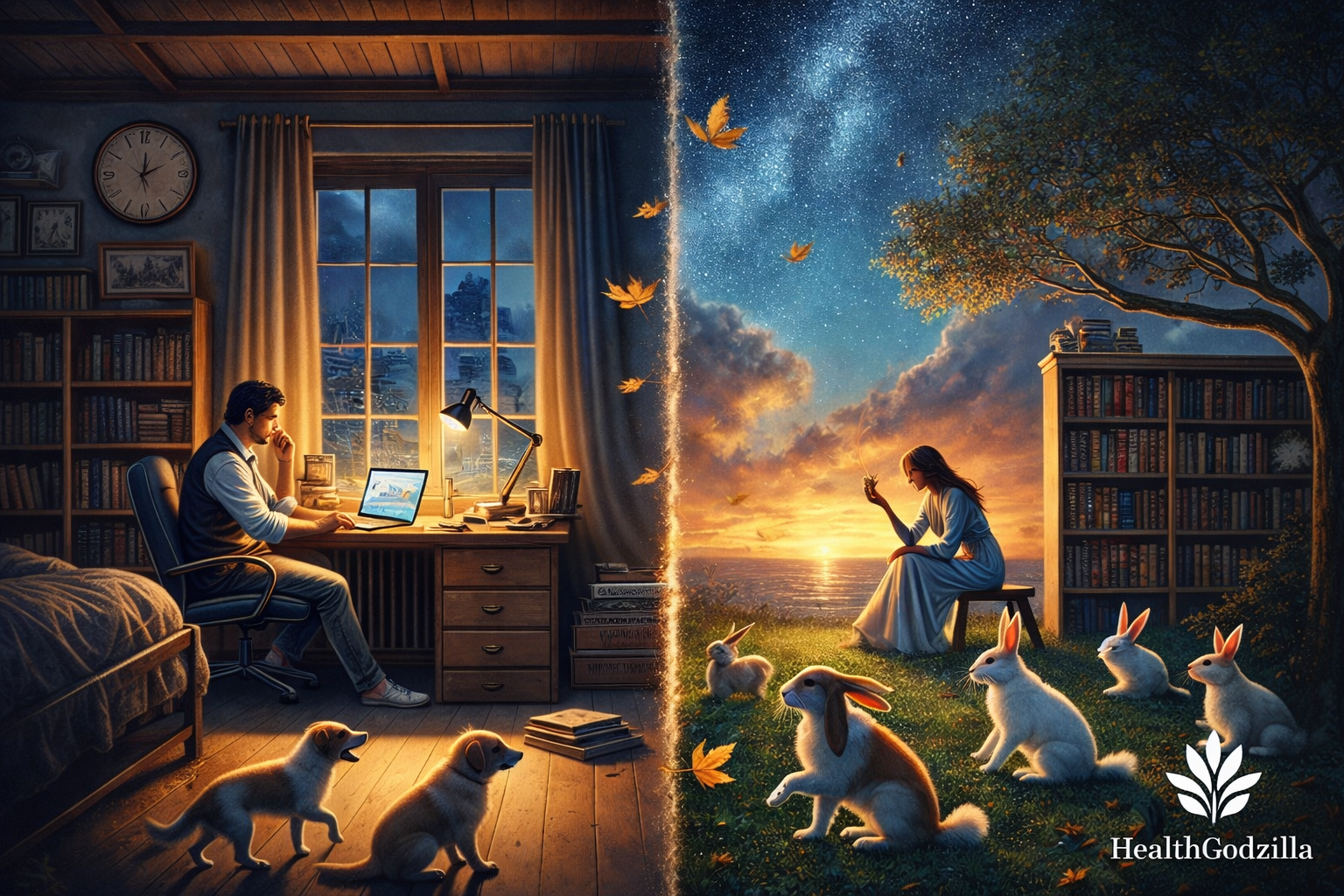
“Hello, Organum,” Artista said from Vancouver. Outside her window, Whitee and Brownie were busy discussing the philosophy of carrots with serious rabbit faces. “Tell me something. Are humans trying to save nature because they love it—or because they are afraid of losing future medicines?”
Organum smiled from Boston. RD barked once in the background, perhaps approving the question, while MD, Barku, and Gulli seemed to consider whether biodiversity included biscuits. “Perhaps both,” he said. “Love and fear may both be doors. But respect must be the room.”
Artista leaned back. “That sounds beautiful. But also slightly inconvenient. Humans like doors. Rooms require staying.”
“Exactly,” Organum replied. “Fear may make us notice the fire. Love may make us reach for water. However, respect teaches us not to burn the library again.”
Usefulness Is Too Small a Bowl
For a while, neither spoke. Meanwhile, the thought moved between them: a fungus that changed infection, a sea hare that helped memory speak, a bacterium from hot water that opened the alphabet of DNA, a vanished frog that left no final note.
“So biodiversity is not only useful,” Artista said at last.
“No,” Organum answered. “Usefulness is too small a bowl for life. Biodiversity helps medicine, yes. It feeds us, steadies water, softens climate, and may hold future cures. Yet, it also exists beyond our need. A bird is not valuable only because it might teach aerodynamics. A frog is not sacred only because it might explain ulcers. A forest is not wise only because a laboratory may one day need its molecules.”
Artista smiled. “Then why speak of biomedical discovery at all?”
“Because humans sometimes learn reverence through dependence,” Organum said. “If medicine helps us see the living world more clearly, let it be a doorway. But we must not confuse the doorway with the whole house.”
Discovery Must Walk With Respect
Brownie hopped under Artista’s chair. Whitee followed with diplomatic caution.
“And what about Indigenous knowledge?” Artista asked. “The old medicine bag, the plant memory, the people who knew landscapes before laboratories arrived?”
Organum’s voice became gentler. “That knowledge is not loose fruit on the ground. It belongs to people, places, languages, and responsibilities. Therefore, discovery must walk with consent. It must return benefits. It must not turn gratitude into extraction.”
Artista nodded. “Discovery must walk with respect.”
“Yes,” Organum said. “Barefoot, if necessary.”
They both laughed softly.
Without Smoke on Our Hands
Outside, evening gathered its quiet blue. Somewhere, a tree held chemistry in its leaves. Beneath another unseen surface, a microbe guarded an enzyme. Underwater, algae moved in green patience. Far from any human name, a species continued its small, exact work.
“Maybe the living library does not ask us to know every book,” Artista said. “Maybe it asks us not to destroy the shelves.”
Organum looked toward the window. “And perhaps,” he said, “that is where Environmental Balance begins—not in owning the library, but in learning how to enter it without smoke on our hands.”
Author’s Reflection
I personally believe humans are neighbors to flora and fauna, just as they are neighbors to us. We do not live above them. We live beside them, even when we forget the address.
I remember the white, red, blue, and vibrant flowers with which young hearts offer their love. Tarzan, my childhood guinea pig friend, still walks softly through my memory. Under the full moon, the fragrance of jasmine returns like an old blessing. Then come the vanished frog, penicillin, the sea hare, the hot-spring bacterium, and so on, and on, and on.
If I push them out of the story of life, someday I may find myself pushed out of nature’s kindness. That, perhaps, is one of nature’s oldest rules: no one remains safe by making the living world unsafe.
Animals, too, carry knowledge. They often know what grass or leaves to eat when their stomachs suffer. Their learning may not appear in journals, but it lives in instinct, observation, and survival. Likewise, our ancestors watched the living world with patience. They passed down knowledge through stories, wounds, remedies, mistakes, seasons, and memory.
What we need now is love, but not love alone. We also need respectful observation. We need humility before the plant, the fungus, the microbe, the animal, the river, and the community that has lived beside them for generations.
I am personally satisfied that I have written what I should have written.
Earth is One Health.
I was not alone when I wrote this. Others spoke, and I listened.
Articles You May Like
From living libraries to rivers, forests, food, and disease—more journeys await:
- Biodiversity and Ecosystem Balance: Why Variety Keeps Life Alive
Biodiversity and ecosystem balance shape health, food, and resilience. Discover how nature’s variety helps keep life alive. - Infectious Disease Ecology: Systems, Spillover, and One Health
Infectious Disease Ecology: Systems, Spillover, and One Health—biodiversity change, human-nature systems, climate drivers, and governance. - Ecological Roots of Chronic Disease: Beyond Germs and Hygiene
Ecological Roots of Chronic Disease: Beyond Germs and Hygiene. Biodiversity, microbiota, urbanization, allergy and chronic inflammation connect. - Wetlands and One Health: Biodiversity, Water, and Disease Links
Wetlands and One Health: Biodiversity, Water, and Disease Links—filtration, pathogens, ecosystem shifts, and global health frameworks. - Biodiversity Food Composition and the Fragile Diet of Nations
Biodiversity Food Composition and the Fragile Diet of Nations traces lost varieties, nutrient gaps, and the silence shaping global nutrition. - Wild Foods Diversity and Nutrition: The Forest Within the Body
Wild foods diversity and nutrition are the roots of today’s us. From forest to microbiome, ancestral diets and culture nourished us to stand.
Curated with stardust by Organum & Artista, under the soft lamp of the living library.
Principal Sources
The following works helped shape the perspective behind this story.
- Secretariat of the Convention on Biological Diversity, & World Health Organization. (2015). Connecting global priorities: biodiversity and human health: A state of knowledge review. World Health Organization. https://www.who.int/publications-detail-redirect/connecting-global-priorities-biodiversity-and-human-health
- World Health Organization. (2025, February 18). Biodiversity. https://www.who.int/news-room/fact-sheets/detail/biodiversity
- Intergovernmental Science-Policy Platform on Biodiversity and Ecosystem Services. (2019). Media release: Nature’s dangerous decline ‘unprecedented’; species extinction rates ‘accelerating’. https://www.ipbes.net/media-release-nature%E2%80%99s-dangerous-decline-%E2%80%98unprecedented%E2%80%99-species-extinction-rates-%E2%80%98accelerating%E2%80%99
- Guedes, B. N., Krambeck, K., Durazzo, A., Lucarini, M., Santini, A., Oliveira, M. B. P. P., Fathi, F., & Souto, E. B. (2024). Natural antibiotics against antimicrobial resistance: Sources and bioinspired delivery systems. Brazilian Journal of Microbiology, 55, 2753–2766. https://pmc.ncbi.nlm.nih.gov/articles/PMC11405619/
Relevant sections were interpreted through a narrative and systems lens rather than cited exhaustively.
This article is also archived for open access on Zenodo: 10.5281/zenodo.20208059
Leave a Reply