
By Ansarul Karim Jamee
Published: July 17, 2026
Ansarul Karim Jamee holds master’s degrees in Environmental Science and Management, History, and Business Administration. For nearly three decades, he has worked across diverse industries, advancing sustainability, well-being, and systems awareness.
Author profiles: LinkedIn | Google Scholar | Academia.edu | ORCID
To learn more about the author and the HealthGodzilla project, visit the HealthGodzilla homepage.
Before the Article Begins
This article explores how biodiversity sustains medicine and health care—and how pharmaceuticals, hospitals, food systems, waste, manufacturing, and global supply chains may return hidden repercussions to the living world.
Biodiversity supports health through species, genes, ecosystems, natural compounds, traditional knowledge, food, clean water, and ecological stability. This wider relationship between biodiversity and human health also includes disease regulation, scientific discovery, cultural knowledge, and the ecological conditions that make well-being possible. Health care, in turn, affects biodiversity through pharmaceutical residues, resource use, environmental contamination, agriculture, procurement, transport, and waste.
How Are Biodiversity and Health Care Connected?
Biodiversity supports health care through medicines, scientific discovery, nutrition, ecosystem services, and traditional knowledge. Health-care systems also shape biodiversity through the way medicines are produced, prescribed, used, discarded, and carried across supply chains. The relationship is therefore reciprocal: biodiversity helps make healing possible, while healing itself can either protect or weaken the living systems on which health depends.
A species may hold a molecule not yet understood. A community may carry knowledge not yet written. A tablet may complete its work in one body and begin another journey in a river. A hospital may save a life while its distant supply chain quietly narrows another species’ world.
The central question, then, is not only how biodiversity serves medicine. It is also this:
Can healing remain whole when the systems that deliver it weaken the larger body of life?
Here, the Article Begins
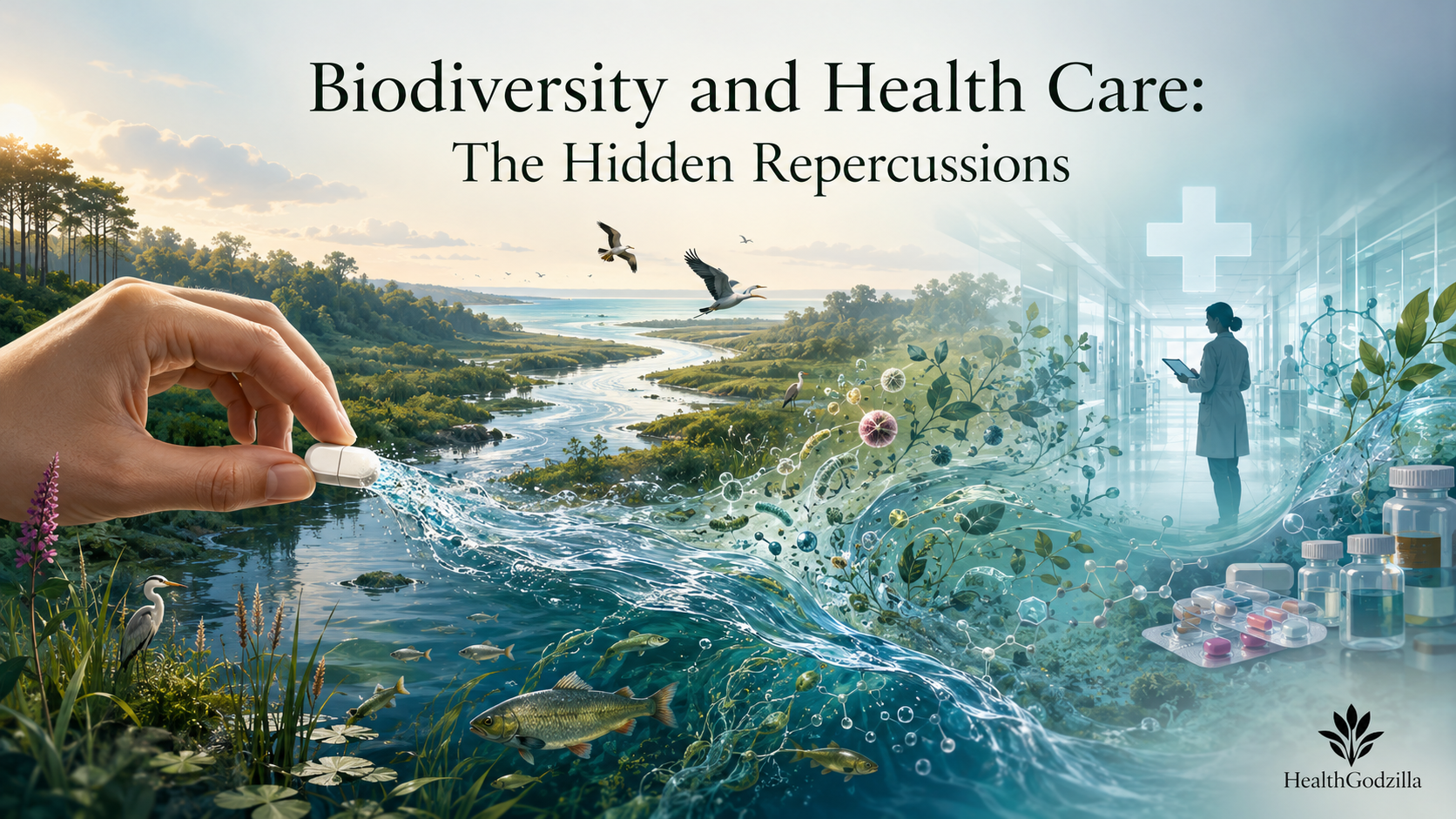
A Tablet Beyond the Prescription
A tablet may disappear in the body, yet its journey may continue in the river.
Once swallowed, the medicine begins its intended work. It may lower pain, calm inflammation, fight infection, steady the mind, or regulate a failing system. However, the prescription does not always end where the treatment ends. Some active pharmaceutical ingredients pass through the body unchanged or as metabolites. From there, they may enter sewage systems, wastewater treatment plants, rivers, soil, groundwater, and eventually the tissues of organisms no doctor intended to treat.
Wastewater treatment can remove many contaminants, but not every pharmaceutical compound breaks down completely. Consequently, traces of hormones, antibiotics, antidepressants, antifungal agents, painkillers, and other medicines may remain in aquatic environments.
Their concentrations may be low. Yet low does not always mean harmless—especially when exposure continues over time, several compounds arrive together, or other environmental pressures have already weakened the ecosystem.
A medicine may therefore complete one task in one body while beginning another story elsewhere.
In the river, the compound enters a wider biological world. Fish, insects, birds, microbes, sediments, plants, predators, and prey become part of its unintended path. Because pharmaceuticals are designed to influence biological processes, their activity does not necessarily vanish when they leave the patient. A molecule shaped to affect a human receptor, hormone, enzyme, mood, or immune response may encounter related systems in another species.
Here, the Prescription Pad Reaches Farther Than It Appears
Science often studies one chemical at a time. Nature, meanwhile, receives the whole orchestra.
Pharmaceutical residues may arrive beside pesticides, industrial chemicals, endocrine disruptors, nutrient pollution, habitat disturbance, and climate stress. Several compounds may also interact, producing effects that no single substance would create alone.
The laboratory isolates the note.
The river carries the composition.
This does not make medicine an enemy. The tablet may save a life, restore dignity, or return a person to family and work. The problem begins when healing is judged only at the point of treatment.
If we care for the arteries while poisoning the veins, who will save the body?
The larger body includes wastewater systems, wetlands, soil, microbial communities, food webs, farms, and distant habitats. Health care does not operate outside nature. It moves within nature’s circulation, whether institutions recognize that circulation or not.
This is where the tablet becomes more than an object.
It becomes a messenger.
It tells us that health care has an afterlife. Its residues and repercussions may continue moving after the patient has left the room. The visible act may be complete, yet another story remains in motion.
A tablet may disappear in the body, but the river remembers.
How Does Biodiversity Sustain Health Care?
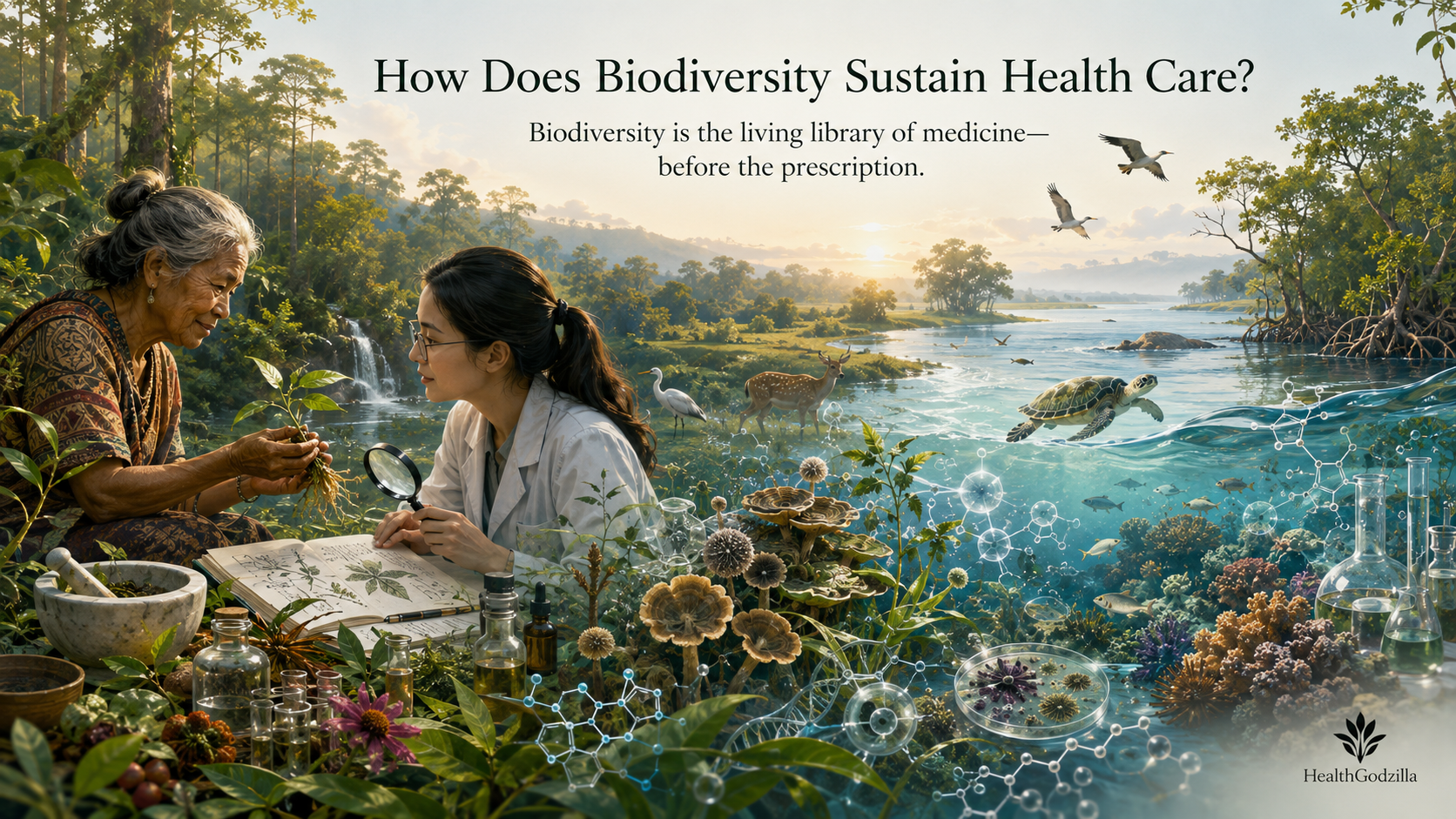
Biodiversity sustains health care long before a medicine reaches the pharmacy shelf.
Plants, fungi, microbes, animals, marine organisms, and the ecological relationships around them have contributed compounds, ideas, and models for treatment. Moreover, traditional communities have carried practical knowledge about medicinal species across generations, often through observation, preparation, season, place, and memory rather than laboratory language. Research on biodiversity and drug discovery shows how natural compounds, traditional knowledge, and international scientific cooperation may open new pathways for medicine while strengthening the case for conservation and fair benefit-sharing.
Modern medicine has travelled far from its ancient roots, yet it has not outgrown nature. The relationship between biodiversity and biomedical discovery shows how evolution has shaped molecules for defence, competition, communication, survival, and adaptation. As a result, natural compounds often carry forms of chemical complexity that science did not invent but gradually learned to recognize.
Nature did not write its chemistry for us, yet we have learned to read a few lines.
Most of the library remains unopened.
Biodiversity Is More Than a Storehouse of Medicines
It is tempting to describe biodiversity as a “living pharmacy.” The phrase is useful, but it can also reduce the living world to a warehouse built for human need.
Biodiversity is more than a collection of useful species. Its genetic variation, ecological relationships, habitats, and living processes together support biodiversity and ecosystem balance. Understanding the pharmaceutical value of biodiversity therefore requires more than identifying useful species; it also requires conserving the genetic variation, habitats, and ecological relationships that sustain their medicinal potential. A medicinal compound may depend not only on a species, but also on the soil, climate, symbionts, predators, stressors, and seasonal rhythms surrounding it.
The medicine is not always hidden in the species alone. Sometimes it is hidden in the relationship between the species and its place.
This is why in situ conservation matters. Seed banks, tissue cultures, botanical gardens, and genetic collections can preserve valuable material. However, they cannot fully recreate the ecological conversation in which that material evolved.
A seed bank may save the alphabet, but the ecosystem preserves the language.
What Happens When the Library Burns Before We Read It?
Habitat destruction, overexploitation, pollution, climate change, invasive species, and poorly governed collection can erase medicinal possibilities before science recognizes them. At the same time, traditional knowledge may disappear when languages fade, communities are displaced, or younger generations lose access to the land and practices that carried that knowledge.
Then two libraries burn together.
One is biological.
The other is cultural.
When a medicinal species disappears, chemistry loses a possibility. When its traditional knowledge disappears, humanity loses the map.
This loss is not only scientific. It is also historical and moral. A plant preserved in a herbarium may retain its form but not the full story of how people gathered, prepared, combined, or respected it. Likewise, a molecule isolated in a laboratory may preserve chemical structure while losing the memory of the community that first recognized its value.
Who Carries the Knowledge—and Who Receives the Benefit?
The search for new medicines can bring discovery, funding, and public benefit. However, it can also place pressure on biodiverse regions and local communities, especially when land, species, or knowledge are taken without fair recognition, consent, access, or benefit-sharing.
A medicine cannot call itself a gift to humanity while forgetting the hands, habitats, and histories that carried it to the laboratory.
This is where the Tender Heart becomes practical rather than ornamental. It asks whether communities remain visible, whether local access is protected, whether the habitat survives, and whether benefits return fairly to those who preserved the knowledge and landscape.
No region should remain the forest while another becomes the laboratory.
Biodiversity and Health Care Share One Future
Protecting biodiversity does not mean rejecting science, pharmaceuticals, standardization, or clinical testing. Rather, it means ensuring that discovery does not consume its own source.
Natural products still require careful evaluation, quality control, toxicity assessment, and pharmacovigilance. “Natural” does not automatically mean safe, pure, effective, or appropriate for every person.
A plant may carry wisdom, poison, or both; reverence does not remove the need for evidence.
Therefore, biodiversity and health care must meet through both curiosity and restraint. Science may search, test, refine, and learn. Yet the species must survive, the habitat must remain, the community must not be erased, and future generations must inherit more than a patent and an empty forest.
To align with nature is not to stop searching.
It is to search without destroying the place in which the answer lives.
How Does Health Care Affect Biodiversity After Treatment?
Health care does not end when the patient leaves the clinic.
Hospitals, laboratories, pharmacies, manufacturing facilities, transport networks, wastewater systems, food services, and supply chains continue moving materials long after treatment is complete. Therefore, the ecological footprint of care extends beyond the visible act of healing. It travels through water, energy, chemicals, packaging, waste, agriculture, and trade.
This does not make health care harmful by nature.
It makes health care material.
Every syringe, tablet, meal tray, disinfectant, glove, diagnostic tool, and hospital bed belongs to a chain of extraction, production, use, and disposal. The clean room has roots in mines, farms, factories, forests, rivers, and ports.
A hospital may look self-contained.
In reality, it is an ecological crossroads.
How Do Pharmaceuticals Enter the Environment?
Pharmaceutical compounds can reach the environment at several stages of their life cycle.
They may enter through:
- discharges during pharmaceutical manufacturing;
- human excretion after treatment;
- veterinary use and animal manure;
- medicines used in aquaculture;
- improper disposal of unused or expired products;
- hospital and household wastewater;
- contaminated sewage sludge applied to land; and
- landfill leakage or poorly managed waste.
These pathways do not carry equal risks. A small household discharge differs from concentrated manufacturing pollution, while residues released onto pasture may behave differently from those entering a river through sewage.
The environmental journey therefore depends not only on the medicine itself, but also on where it enters, how much is released, how often the release occurs, and what conditions surround it.
What Happens After a Pharmaceutical Enters Water or Soil?
Some compounds break down through sunlight, microorganisms, chemical reactions, or other natural processes. Others persist long enough to travel through rivers, sediments, soil, groundwater, or food webs.
A pharmaceutical may also transform into other substances. These transformation products may be less active, remain biologically active, or sometimes show greater persistence or toxicity than the original compound.
Persistence alone does not determine danger. Environmental consequences also depend on concentration, toxicity, mobility, bioavailability, exposure time, and the sensitivity of the organisms that encounter the substance.
The path is rarely simple:
release → transport → transformation → exposure → biological response
At every step, local conditions may change the outcome.
Acute Exposure and Chronic Exposure Are Not the Same
A high concentration over a short period may cause an acute effect, such as poisoning, tissue damage, or death.
However, many pharmaceutical residues occur at lower concentrations over longer periods. Chronic exposure may influence behavior, reproduction, development, feeding, growth, immune function, or microbial relationships without causing immediate death.
This distinction matters.
An organism may survive the exposure while behaving differently.
Reproduction may weaken. The organism may become easier prey, feed less, migrate differently, or lose part of its ecological role.
Therefore, environmental harm cannot be measured only by counting dead organisms. Sometimes the species remains present while its relationship with the ecosystem quietly changes.
Low concentration does not automatically mean low consequence.
Time is also part of the dose.
Why Mixtures Complicate Environmental Risk
Pharmaceuticals seldom enter an untouched environment.
They may occur beside pesticides, industrial chemicals, detergents, heavy metals, nutrient pollution, endocrine-disrupting compounds, and other drug residues. Organisms may therefore encounter mixtures rather than isolated substances.
Some compounds may act independently. Others may produce additive effects, in which their combined influence equals the sum of their individual effects. In some cases, interactions may strengthen or weaken the overall response.
This makes environmental assessment difficult.
A laboratory may study one substance, one concentration, one species, and one biological endpoint. An ecosystem contains many organisms, changing seasons, predator–prey relationships, food webs, and pressures arriving from different directions.
The laboratory can identify an important part of the risk.
The ecosystem carries the full condition.
How Are Non-Target Organisms Affected?
Pharmaceuticals are designed to alter biological processes. When they enter ecosystems, they may encounter organisms that share related hormones, receptors, enzymes, nervous systems, immune pathways, or microbial functions.
A hormone may disturb reproduction in aquatic organisms.
An antidepressant may alter feeding, movement, fear responses, or social behavior.
An antiparasitic medicine may harm insects living in dung.
An antibiotic may change microbial communities or create conditions that favor resistant organisms.
The first biological effect may also travel through ecological relationships.
One organism changes.
Another loses food.
A predator alters its movement.
A competitor gains an advantage.
The food web shifts.
Therefore, the ecological effect may appear far from the place where the pharmaceutical first entered the environment. The visible dose may be small, yet the geometry of consequence can become large.
Veterinary Medicine and the Wider Food Web
Veterinary pharmaceuticals may enter ecosystems through especially direct routes.
Grazing animals can excrete residues onto pasture. Manure and slurry may carry them into soil and waterways. Medicines used in aquaculture may disperse through water or collect in sediment. Treated livestock carcasses may expose scavenging birds and mammals.
A veterinary treatment may therefore encounter organisms that were never part of the clinical decision.
A medicine given to livestock may affect insects living in dung. Fewer insects may mean less food for birds or bats. A residue remaining in a carcass may reach scavengers. A treatment used in fish farming may affect organisms beyond the enclosure.
The pharmaceutical follows the food web, whether regulations recognize the pathway or not.
Here, the boundary between animal health and ecosystem health becomes thin. Human medicine, veterinary care, agriculture, microbial life, wildlife, water, and public health already share one circulation.
This is One Health in physical form.
Health-Care Waste Extends Beyond Pharmaceuticals
Pharmaceutical pollution forms only one part of health care’s environmental footprint.
Health-care systems consume energy and water. They generate plastics, packaging, chemicals, infectious materials, electronic waste, and sometimes radioactive waste. Their operations also depend on sterilisation, refrigeration, transport, construction, laundry, food services, and industrial manufacturing.
Poor segregation or disposal may allow hazardous materials to enter soil, air, or water. Open burning can release toxic pollutants. Untreated liquid waste can burden rivers. Disposable products may persist long after their brief clinical use has ended.
A hospital may protect patients from infection while its waste burdens a community downstream.
A clinic may conserve water inside one room while its supply chain consumes water elsewhere.
A medicine may be produced under strict quality controls while manufacturing residues enter a poorly regulated river.
The contradiction is not always visible at the point of care.
Can Health Care Heal Without Transferring Harm?
Health care can reduce its ecological repercussions through cleaner manufacturing, stronger wastewater treatment, green chemistry, careful prescribing, responsible disposal, medicine take-back programs, safer veterinary practices, and better waste segregation.
It can also examine whether every disposable product is necessary, whether reusable alternatives remain clinically safe, and whether procurement decisions transfer environmental pressure to distant communities and habitats.
Clinical effectiveness and ecological safety are not enemies.
They are parts of a fuller standard of care.
However, technical solutions alone may not be enough. A deeper change is also required: health care must stop imagining that the patient is the only body in the room.
The larger patient includes rivers, soil, microbes, wildlife, farms, food webs, workers, neighbouring communities, and future generations connected through production and waste.
Healing becomes whole only when care does not merely move harm out of sight.
The Vulture at the End of the Theatre
Vultures rarely receive applause.
They arrive after the drama, when the body has fallen and the visible story appears finished. They do not sing like familiar birds or decorate gardens with gentleness. Yet their work is one of quiet sanitation. By consuming carcasses quickly, they help prevent decay from lingering across fields, water, soil, livestock routes, and human settlements.
They are not bad souls.
They are good friends dressed in misunderstood feathers.
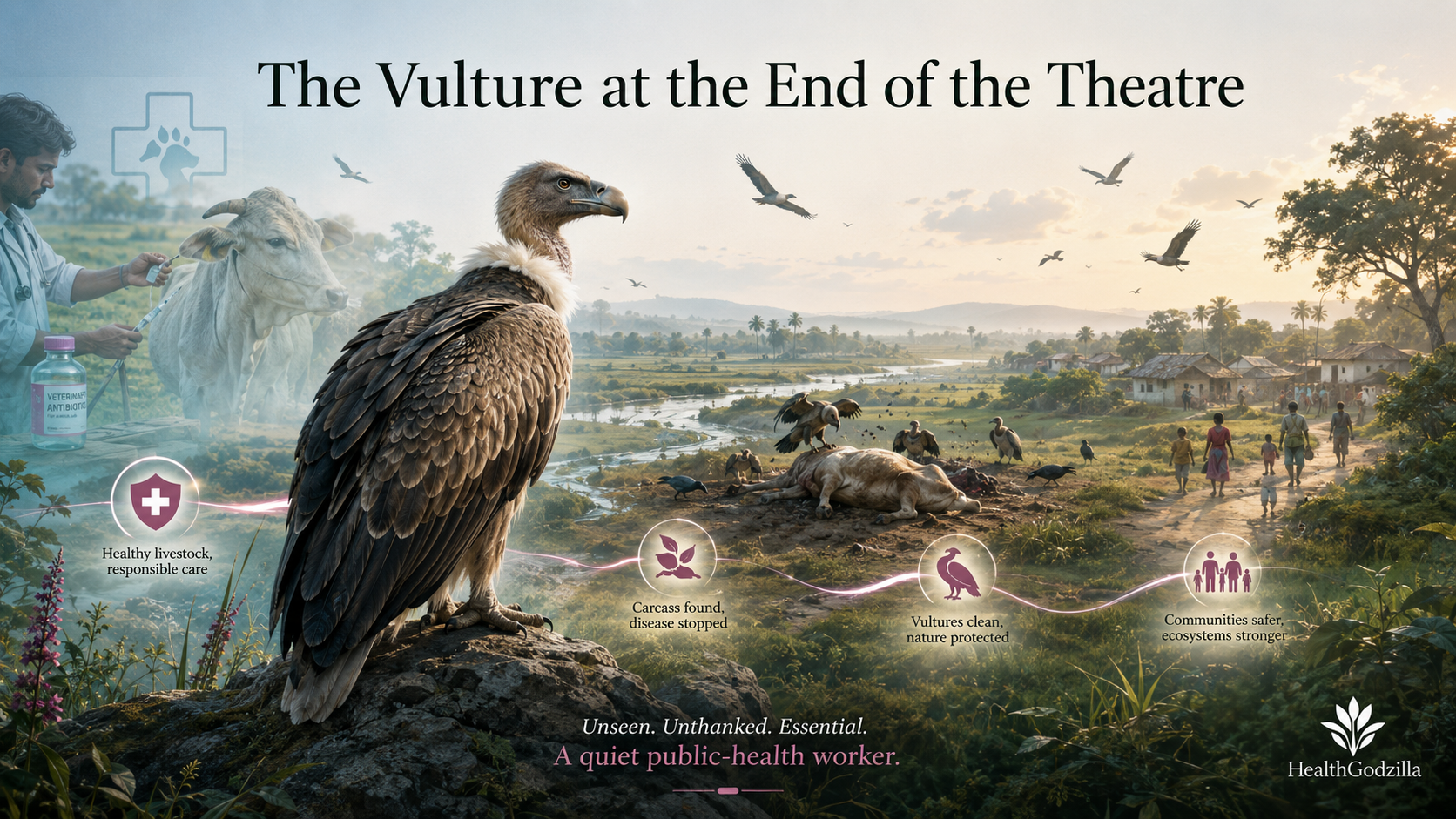
For generations, people noticed the vulture mainly as a scavenger. Only when these birds began disappearing across South Asia did their deeper role become visible. Populations of several once-common vulture species collapsed after feeding on livestock carcasses containing residues of the veterinary drug diclofenac. The medicine had been used to relieve pain and inflammation in animals. However, even small residues in carcasses could cause acute renal failure and death in vultures.
The medicine worked in the livestock.
The repercussion waited in the sky.
As vulture numbers fell, carcasses remained longer in the open. Other scavengers, especially feral dogs, gained greater access to the abandoned food source. Consequently, the change carried wider public-health concerns, particularly through increased exposure to dog bites and rabies.
One treatment had moved through several bodies:
livestock → medicine → carcass → vulture → scavenger community → disease risk → human health
No actor stood alone.
The geometry was already complete, whether policies and procedures recognized it or not.
When the Missing Bird Reveals the System
The vulture’s disappearance teaches a difficult lesson: some species become visible to society only after their ecological work stops.
While they were present, carcasses vanished quietly.
When they left, the landscape remembered them.
This is often how ecosystem services enter public awareness. Pollinators are noticed when crops fail. Wetlands are valued when floods arrive. Predators are missed when prey populations become unstable. Likewise, vultures were understood more fully when the stage remained uncleared.
We only knew the friend when the friend stopped coming.
A species does not need a uniform, salary, hospital badge, or public-health title to participate in the health system. The vulture cleaned the landscape without invoice or ceremony.
The vultures were not collateral scenery. They were participants in the health system, though no hospital employed them and no prescription named them.
One Health in Physical Form
The diclofenac story is not merely about wildlife poisoning.
It is One Health in physical form.
Veterinary care, livestock management, pharmaceutical regulation, scavenger ecology, waste removal, feral-animal populations, infectious-disease risk, and human well-being became part of one chain. A medicine intended for one body entered the food web and changed the conditions surrounding many others.
Therefore, environmental risk assessment cannot stop at the treated animal.
It must ask:
What happens after death?
Who feeds on the carcass?
Which organisms encounter the residue?
What ecological function may weaken?
What human consequence may return later?
The prescription was written for livestock, but the ecosystem read it too.
The Conscience at the End of the Story
At the end of the theatre, the vulture enters—not as a villain, but as the conscience of the story.
Its absence reveals what the visible actors failed to notice. Healing had been measured at the level of the treated animal, while the wider composition remained unheard.
The lesson is not that veterinary medicine should retreat. Rather, care must widen its field of attention. Safer alternatives, stronger regulation, responsible prescribing, enforcement, and cooperation with farming communities can help protect both animal health and scavenger populations.
The vulture asks for no monument.
Only that we remember the work it performs while still present.
A healthy landscape is often maintained by lives that remain unseen because they are doing their work well. Therefore, the disappearance of the vulture was not merely the loss of a bird.
It was the loss of a quiet public-health worker whom humanity had never officially hired.
Biodiversity, Health Care, and Antimicrobial Resistance: Repercussion, Not Revenge
Antimicrobial resistance does not begin with anger.
Nature does not gather in a courtroom, pronounce judgment, and return our medicines as punishment. Microbes simply respond to pressure. They adapt, exchange genetic material, survive, multiply, and continue.
Antimicrobial resistance is not nature’s revenge. It is the repercussion of our own design—the evolutionary answer to the conditions we created.
Antibiotics, antifungals, and antiparasitic drugs have saved countless lives. However, their power also creates selection pressure. When susceptible microbes die and resistant ones survive, the surviving population gains an advantage. Over time, repeated exposure can help resistance spread through microbial communities.
The process is not mysterious.
It is evolution at work.
How Do Antimicrobials Enter the Environment?
Antimicrobial compounds may enter rivers, soil, sediments, farms, sewage systems, aquaculture sites, landfills, and wastewater through several routes.
They may come from:
- human excretion after treatment;
- veterinary use in livestock;
- aquaculture;
- pharmaceutical manufacturing;
- improper disposal;
- manure and sludge applied to land;
- and untreated or incompletely treated wastewater.
In each case, antimicrobial residues can meet microbes outside the clinic.
This does not mean every trace automatically creates resistance. The causes of antimicrobial resistance are complex. Overuse, misuse, poor infection control, inadequate sanitation, inappropriate prescribing, and non-therapeutic use in agriculture all matter. Yet the environment is not an empty background. It is one of the places where resistance may develop, persist, mix, and travel.
The hospital is not the only arena.
The river is also part of the story.
Biodiversity and Health Care Meet in the Microbial World
Microbes are often discussed only as enemies.
However, microbial life is vast, ancient, and essential. Microbes cycle nutrients, support soil fertility, shape digestion, influence ecosystems, and participate in the health of plants, animals, and people. Some cause disease. Many sustain life.
Therefore, when antimicrobial pressure enters microbial communities, the result may extend beyond a single pathogen. It can alter relationships, favor resistant strains, and encourage the movement of resistance genes across species and environments.
This is where biodiversity becomes microscopic.
The forest has roots and feathers.
It also has genes, plasmids, biofilms, and invisible communities flowing through water and soil.
A health system that ignores microbial ecology sees only one room of the house.
Resistance Travels Through Relationships
A resistant organism does not need a passport.
It may move through water, food, soil, livestock, wildlife, sewage, hospitals, farms, and human settlements. Wildlife may carry resistant microbes without causing the original problem. Agricultural environments may preserve them. Rivers may transport them. Communities with weak sanitation may face greater exposure.
The path is rarely straight.
A drug is prescribed.
Part of it leaves the body.
Wastewater carries it onward.
Microbes encounter the residue.
Some survive.
Resistance genes persist or spread.
Later, the consequence may return to the clinic, where a familiar medicine no longer works as it once did.
The prescription ends.
The evolutionary conversation continues.
When a Cure Trains the Threat
This is one of the hardest paradoxes in medicine:
A drug may save lives and, through careless use, help weaken its own future power.
Growth stops being growth when it becomes punishment.
Likewise, treatment stops being wise when every problem receives the same antimicrobial answer.
The issue is not medicine itself. The issue is pressure without proportion.
When antimicrobials are overprescribed, used unnecessarily, sold without proper control, added routinely to animal production, or released through poorly managed waste, we create repeated training grounds for resistance.
The microbe does not rebel.
It learns.
One Health Without Permission
Antimicrobial resistance reveals One Health in its most physical form.
Human medicine, veterinary care, agriculture, wastewater, microbial ecology, wildlife, food systems, and public health already share one circulation—whether institutions recognize it or not.
A hospital may treat the infection.
A farm may use the same class of drug.
A factory may release residues.
A river may carry them.
A microbe may adapt.
A patient years later may receive a medicine that has lost part of its strength.
No single sector owns the consequence.
The supply chain divides responsibility into small pieces, but the microbial world receives the whole condition.
What Would Responsible Healing Require?
The answer is not to abandon antimicrobials. It is to protect them.
That requires careful prescribing, accurate diagnosis, infection prevention, vaccination, sanitation, stronger wastewater treatment, responsible veterinary use, better manufacturing controls, proper disposal, and coordinated monitoring across human, animal, and environmental systems.
It also requires humility.
Science must recognize that antimicrobial resistance is not merely a battle between medicine and microbes. It is a systems problem shaped by behavior, infrastructure, ecology, economics, regulation, and time.
A hammer sees nails.
A lamp reveals the room.
Science must remain the lamp.
The goal is not domination, but proportion: enough treatment to protect life, enough restraint to preserve future treatment, and enough ecological awareness to understand where the medicine travels after we stop looking.
Antimicrobial resistance is not nature’s revenge.
It is the echo of pressure.
And sometimes, the echo returns louder than the original sound.
The Hidden Supply Chain Between Health Care and Biodiversity
A hospital may appear to begin at its entrance.
In reality, it begins much farther away.
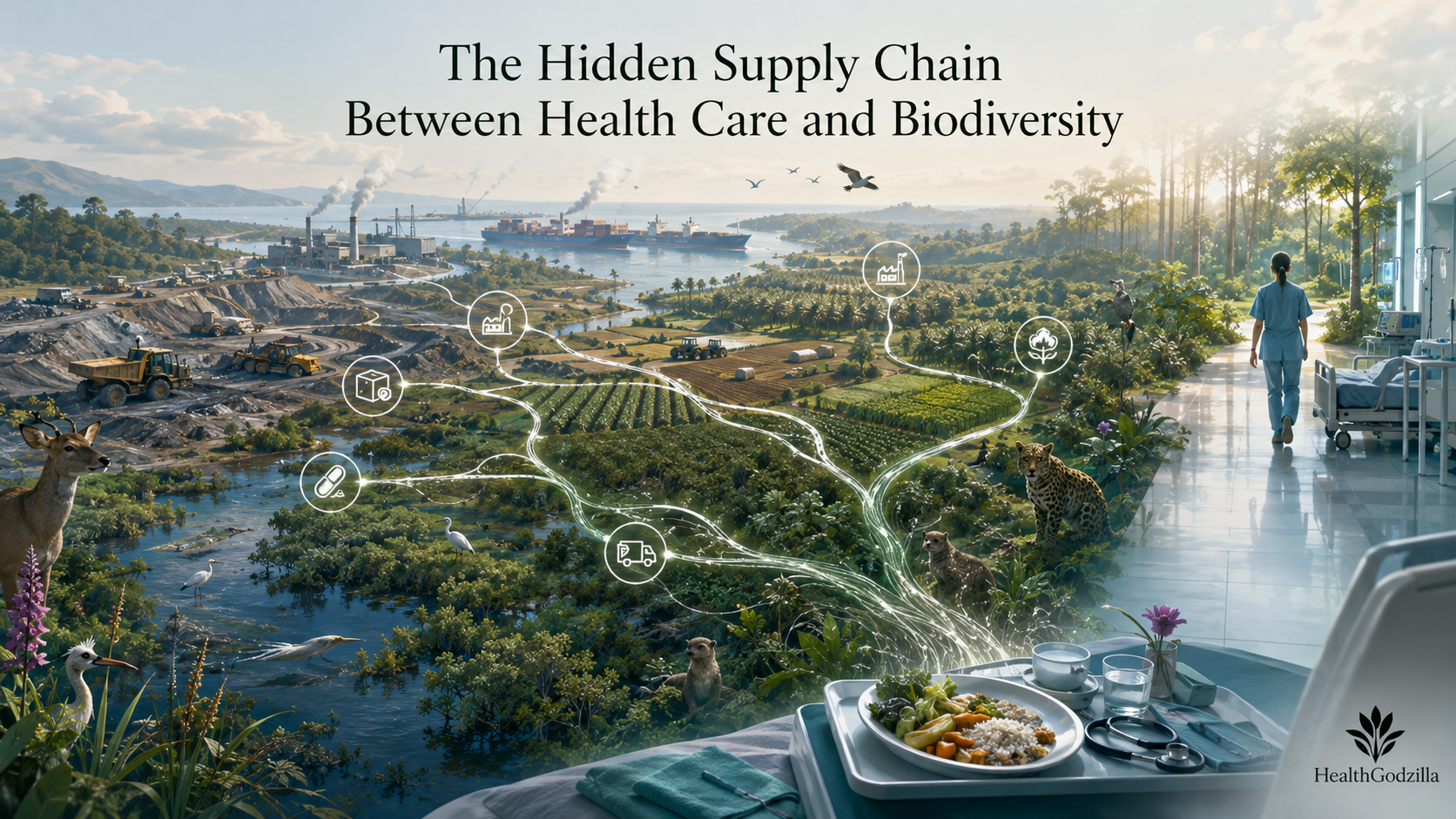
Its medicines, instruments, food, uniforms, disinfectants, packaging, furniture, electronics, construction materials, and energy arrive through long chains of extraction, farming, manufacturing, transport, and trade. Therefore, the visible place of care rests upon an invisible geography.
The white corridor may continue into a distant forest.
The operating room may begin in a mine.
The meal beside a patient’s bed may carry the history of soil, water, labour, habitat, and land-use change.
Health care does not simply purchase products. It also inherits the human impacts on biodiversity embedded in extraction, farming, manufacturing, transport, and trade.
Where Does the Biodiversity Footprint of Health Care Fall?
A recent analysis of the biodiversity footprint of health care found that almost all of the estimated extinction-risk impact of the Dutch health-care sector occurred outside the Netherlands, often deep within global supply chains. Moreover, the direct impact did not appear mainly at the hospital or clinic. It emerged deeper within global supply chains, often several production layers away from the final point of care.
This distance matters.
When ecological harm occurs far from the institution that creates the demand, the connection becomes difficult to see. A hospital may buy from one supplier, which buys from another, which depends on a processor, which purchases from a farm, plantation, mine, or manufacturing site in another country.
Each actor sees one transaction.
The ecosystem receives the whole chain.
Biodiversity and Health Care Meet Far Beyond the Hospital
The study found that food and beverage supply chains made a disproportionate contribution to the extinction-risk footprint of Dutch health care. Although these sectors received only a modest share of intermediate spending, they accounted for a much larger share of the estimated biodiversity impact.
This finding is easy to overlook.
When people imagine the environmental footprint of health care, they may first think of pharmaceuticals, plastic waste, electricity, transport, or medical equipment. Yet hospitals and care facilities also purchase food for patients, staff, residents, and visitors. That food depends on agriculture, water, land, fertilizers, fisheries, livestock, processing, storage, refrigeration, and global trade.
A hospital meal may look ordinary.
Behind it may stand a forest cleared, a wetland narrowed, a plantation expanded, or a threatened species pushed closer to silence.
The tray arrives clean.
Its history may not be.
The Species That Never Signed the Purchase Order
The supply-chain study linked Dutch health-care consumption with extinction risks affecting threatened species in distant countries. Some of these connections travelled through agricultural commodities such as cocoa.
The patient may never see the plantation.
The clinician may never know the species.
The hospital administrator may see only the invoice.
Yet the ecological cost may fall upon habitats and animals far beyond the place where care is delivered.
The species at the end of the supply chain never signed the purchase order, yet it may pay the cost.
This does not mean that every hospital purchase directly causes the decline of a particular species. Supply-chain models estimate patterns of economic demand and environmental pressure; they do not trace every physical item with perfect certainty. Still, they reveal something morally and materially important:
Consumption has geography.
Care has distance.
Demand has consequences beyond the room in which the purchase is approved.
Clean Here, Burdened Elsewhere
An institution may appear environmentally responsible because its immediate premises are clean, orderly, and well managed.
However, cleanliness at the point of care may hide pressure transferred elsewhere.
A hospital can reduce direct waste while still relying on damaging agricultural systems.
It can improve energy efficiency while purchasing products linked to habitat loss.
It can maintain spotless rooms while distant rivers, soils, forests, or communities absorb the burden of production.
Environmental cleanliness at the point of care may be an illusion if the dirt has merely been exported.
This is one of the deepest challenges of modern systems: harm can become invisible by becoming distant.
The farther the repercussion travels, the easier it becomes to call it somebody else’s problem.
Climate Progress Does Not Automatically Protect Biodiversity
The study also found that the activities contributing most to greenhouse-gas emissions were not necessarily the same activities contributing most to extinction risk. For example, transport, utilities, and chemicals may weigh heavily in a carbon footprint, while food and agriculture may carry a larger share of certain biodiversity impacts.
Therefore, one environmental indicator cannot speak for the whole living world.
A hospital may reduce emissions and still harm biodiversity.
Another may improve procurement but continue wasting food.
A third may control pharmaceutical residues yet overlook distant land-use pressure.
Clinical precision may still miss ecological disharmony.
This does not weaken climate action. It strengthens environmental thinking.
Carbon, water, contamination, waste, land use, species decline, and ecosystem integrity are connected, but they are not interchangeable. A single number may guide one path while leaving another hidden.
Who Is Responsible When the Chain Is Long?
The longer the supply chain becomes, the easier it is for responsibility to dissolve.
The buyer points to the supplier.
The supplier points to the manufacturer.
The manufacturer points to the commodity trader.
The trader points to the producer.
The producer points to demand.
Meanwhile, the forest does not receive divided responsibility.
It receives the bulldozer.
The river does not receive a procurement policy.
It receives the discharge.
The species does not experience a percentage allocation.
It experiences habitat loss.
This is not a call to assign simple blame. Supply chains are complex, and no hospital can control every distant transaction alone. However, complexity must not become an alibi for blindness.
Responsibility may be shared without becoming absent.
How Can Health Care See Farther?
Health-care institutions can begin by asking better questions.
Where do their food, textiles, chemicals, equipment, and raw materials come from?
Which suppliers operate in regions with fragile ecosystems or weak environmental safeguards?
How much food is wasted?
Can procurement favor lower-impact, traceable, durable, repairable, and responsibly sourced products?
Can hospitals work collectively so that suppliers receive one clear environmental expectation rather than scattered requests?
Supply-chain audits, sustainable procurement, reduced food waste, stronger supplier standards, and transparent sourcing can help make hidden impacts more visible.
Yet the task is not merely technical.
It is imaginative.
Health care must learn to see the patient, the product, and the place of origin in one frame.
That is One Geometry.
It must hear the clinic, the farm, the factory, the river, and the forest in one composition.
That is Symphony in Chaos.
And it must remember the distant species and communities whose worlds support the act of care without ever entering the hospital record.
That is the Tender Heart.
A health-care system may save a life in one room while placing pressure on life elsewhere.
The first act is visible.
The second waits in the supply chain.
Can a Footprint Contain the Forest?
A footprint can reveal the trail, but it cannot contain the forest.
After following health care through rivers, vultures, microbes, farms, and distant supply chains, another question appears: How do we measure a consequence spread across so many places and lives?
Researchers use biodiversity indicators, extinction-risk models, and supply-chain analysis to make hidden pressures visible. One recent study, for example, estimated how health-care consumption may contribute to extinction risk across countries, sectors, and production layers. Such tools can expose connections that invoices and institutional boundaries conceal.
Therefore, measurement matters.
It can compare patterns, identify high-impact sectors, guide procurement, and reveal where ecological pressure falls. Yet every measurement also draws a boundary around what it can see.
A metric is a window, not the landscape.
Science serves the larger patient best when it illuminates both what is known and what remains outside the measurement.
What Does an Extinction-Risk Footprint Measure?
The study estimates biodiversity impact through the extinction risk facing selected threatened and Near Threatened species. It connects species-level threat data with economic activity and global supply chains.
This allows researchers to ask:
Where does the pressure fall?
Which sectors contribute most?
Which countries bear the ecological cost?
How deeply is the impact hidden within the supply chain?
These are important questions.
However, the study also acknowledges that its scope is limited. It focuses on certain threatened birds, mammals, and amphibians. It does not fully represent genetic diversity, ecosystem integrity, species richness, microbial life, ecological relationships, or the interaction of many threats acting together.
The model can count part of the danger.
It cannot count the whole conversation.
Biodiversity and Health Care Beyond the Metric
Biodiversity is more than the number of species approaching extinction.
It is also variation within species, relationships among organisms, seasonal rhythms, soil processes, migration routes, food webs, symbiosis, competition, memory, and adaptation.
A wetland is not merely a list of birds.
A forest is not merely a count of mammals.
A river is not merely a set of threatened species.
Inventory tells us who is present.
Ecology tells us who is speaking to whom.
This distinction matters because a system may appear stable in a dataset while its relationships are quietly weakening. A species may remain present but decline in genetic diversity. A pollinator may survive while flowering times shift. A predator may persist while its prey disappears. The actors remain on stage, yet the dialogue begins to collapse.
The danger of inventory begins when presence is mistaken for wholeness.
When Numbers Become Too Powerful
Numbers carry authority.
A figure enters a report, appears in a graph, and begins to look more solid than the living world behind it. Institutions often prefer what can be ranked, compared, and placed inside a target.
This preference is understandable.
However, once the metric becomes the forest, whatever lies outside the metric begins to disappear from attention.
The uncounted may then appear unimportant.
The unmeasured may seem unreal.
The species with no available data may receive no protection. The ecological relationship without an indicator may remain outside the plan. The community knowledge that cannot fit a spreadsheet may be treated as anecdote.
A number may guide judgment.
It should not replace judgment.
Science as Lamp, Not Hammer
The answer is not to reject measurement.
Without data, hidden harm may remain hidden. Supply-chain analysis, extinction-risk models, environmental indicators, and monitoring systems can help health-care institutions act more responsibly. They can reveal patterns that intuition alone cannot see.
Yet science must remain the lamp.
Science serves best when it clarifies without pretending completeness. A careful researcher says not only, “This is what we found,” but also, “This is what our method could not hold.”
That humility does not weaken the evidence.
It gives the evidence proportion.
The Forest Exceeds the Footprint
A footprint can show where pressure travels.
It cannot feel the silence after a species disappears.
Nor can it preserve the lost relationship between a flower and its pollinator.
The memory of a community that once knew when a medicinal plant should be gathered also lies beyond its reach.
Likewise, it cannot describe the unseen microbial life beneath the soil or the evolutionary possibilities carried inside genetic variation.
The number is useful.
The living world is larger.
Therefore, the purpose of measurement should not be to compress biodiversity into a manageable figure. It should be to help us notice where life is being narrowed—and then remind us that the real loss always exceeds the account.
A footprint can reveal the trail.
The forest remains beyond it.
Biodiversity and Health Care: The Larger Patient
The larger patient cannot be admitted to one ward because its symptoms appear across rivers, microbes, wildlife, forests, farms, communities, and supply chains.
Around that body stands a larger body of life: animals, microbes, rivers, soil, food systems, forests, farms, communities, and future generations. Each supports health in ways that may remain invisible until one part begins to fail.
Health care becomes incomplete when it treats the visible patient while forgetting the living systems that keep every patient alive.
One Health: The Web Already Exists
One Health is not a decorative principle added after the science is complete.
It is the web in which the science already occurs.
Human medicine, veterinary care, microbial life, agriculture, water, wildlife, food systems, and public health are already joined, whether institutions recognize the connection or not. A medicine given to livestock may reach a scavenger. An antimicrobial released into wastewater may meet environmental microbes. A food purchase made by a hospital may place pressure on a distant habitat.
The connections do not wait for institutions to recognize them.
They continue quietly.
One Health, therefore, is not an invitation to create a relationship. It is an invitation to notice the relationship already shaping us.
One Geometry: The Hidden Pattern of Care
At first, the tablet, the river, the vulture, the microbe, the hospital meal, and the distant forest may appear to belong to separate stories.
Yet they are points within one geometry.
A prescription affects a body.
A body releases residues.
Wastewater carries them onward.
Microbes respond.
Wildlife encounters them.
Supply chains bring food, metals, chemicals, and materials from distant landscapes.
Health care receives the products.
The environment receives the repercussions.
No point stands alone.
One Geometry does not mean that every connection is simple or predictable. It means that actions enter patterns larger than their immediate purpose.
The line drawn from patient to treatment may look straight.
The full figure is not.
Symphony in Chaos: The Whole Composition
Health care often works by precision.
A dose is measured.
A pathogen is identified.
A receptor is targeted.
A procedure is timed.
This precision saves lives. However, ecosystems do not receive interventions one at a time. They receive mixtures, seasons, disruptions, recoveries, migrations, residues, and many pressures at once.
Science may isolate one note for study.
Nature receives the whole orchestra.
A medicine may perform beautifully in the patient and still alter behavior in another species. A climate intervention may reduce emissions while leaving land-use pressure unchanged. A hospital may improve waste management while its food supply chain continues narrowing habitats.
A treatment can succeed locally while unsettling the wider composition.
The lesson is not to abandon precision.
It is to place precision inside composition.
The Tender Heart: Seeing Those Outside the Record
The Tender Heart begins where official records end.
The patient has a name.
The physician has a name.
The medicine has a label.
The hospital has a budget.
But the vulture cleaning the landscape may have no place in the health account. The microbe changing under selection pressure appears only when resistance becomes a crisis. The threatened species at the far end of a supply chain never signs the purchase order. The community that preserved medicinal knowledge may disappear behind the laboratory that later receives praise.
The Tender Heart asks us to see them before their absence becomes evidence.
It does not reject economics, medicine, or research.
It asks them to remember whom their measurements may leave outside the frame.
A species should not need to contain a cure in order to deserve continuity.
A community should not need to surrender its knowledge in order to be called cooperative.
A river should not need to become visibly poisoned before its health enters the discussion.
Tenderness, here, is not softness.
It is attention with moral courage.
The Tender Diagnosis
The health of one body cannot be separated entirely from the health of the world around it.
This does not mean every treatment must solve every ecological problem. Nor does it mean medicine should hesitate when a life requires urgent care.
It means that healing should not end at the visible edge of the patient.
The clinician may treat the person.
The health system must also consider the river, the supply chain, the microbial world, the species, and the community standing beyond the room.
The patient before us is real.
The larger patient is real too.
One asks for care now.
The other asks that care not become another wound.
Align with Nature: Healing Without Transferring Harm
Align with Nature does not ask medicine to retreat.
It asks healing to widen its field of responsibility.
The patient still needs treatment. The infection still requires control. Pain still deserves relief. Surgery, diagnosis, pharmaceuticals, sanitation, and public-health systems remain essential. Yet care becomes more complete when it considers what happens before treatment, during treatment, and after the visible work is done.
Healing should not protect one body by quietly transferring harm into another body, species, river, or landscape.
Can Medicine Begin With Fewer Repercussions?
Some environmental harm begins long before a medicine reaches the patient.
Pharmaceutical manufacturing may require large amounts of water, energy, solvents, raw materials, and chemical processing. When emissions are poorly controlled, active ingredients and other contaminants may enter wastewater, soil, rivers, and surrounding ecosystems.
Therefore, cleaner production and stronger manufacturing controls belong to health care itself—not merely to environmental management.
Green chemistry offers one direction. It encourages safer materials, more efficient production, reduced waste, and processes designed to retain therapeutic value while lowering environmental risk.
A medicine should not begin its healing journey by leaving an untreated wound at the factory gate.
However, design alone cannot solve every problem. A pharmaceutical may remain biologically active because that activity is precisely what makes it useful. Cleaner design must therefore meet careful regulation, transparent monitoring, effective wastewater treatment, and accountability across the production chain.
Manufacturers must know what leaves their facilities, not only what enters the medicine packet.
Regulators must consider ecological effects alongside quality, safety, and clinical effectiveness.
Purchasers must ask whether low prices conceal untreated environmental costs elsewhere.
Care begins before the prescription.
Wise Prescribing and Care Beyond the Last Dose
Every medicine should remain available when genuinely needed.
At the same time, unnecessary treatment can create avoidable costs for patients, health systems, microbes, and ecosystems. Overprescribing, inappropriate dosing, routine antimicrobial use, and weak controls may increase pharmaceutical residues and selection pressure without improving health.
Wise prescribing does not mean withholding care.
It means proportion.
The right medicine.
For the right need.
At the right dose.
For the right duration.
This is restraint without abandonment.
A health system should not confuse more treatment with better treatment. Sometimes care acts through intervention. Sometimes it acts through the courage not to prescribe what the body does not need.
However, responsibility does not end when the prescription is completed.
Unused medicines may remain in cupboards, pass their expiry dates, enter household waste, or be flushed into sewage systems. Consequently, medicine take-back programs and clear disposal guidance can reduce unnecessary release into landfills, wastewater, soil, and water.
Pharmacists, clinicians, manufacturers, and public agencies all have a role in making safe disposal ordinary rather than mysterious. Patients should not have to guess what to do with an unused tablet or half-empty bottle.
The life of a medicine continues through its manufacture, prescription, use, excretion, collection, and disposal.
The last dose should not become the first dose for the river.
Wastewater Is Part of Health Care
Wastewater treatment often appears outside the medical story.
Yet pharmaceutical residues, disinfectants, resistant microbes, diagnostic chemicals, and other health-care contaminants may pass through hospital, household, municipal, and manufacturing wastewater.
Therefore, wastewater infrastructure forms part of the unseen architecture of public health.
Treatment technologies can remove or reduce many contaminants before they enter rivers, groundwater, soil, and food systems. However, no single process removes every pharmaceutical compound, resistant organism, resistance gene, or transformation product under all conditions.
A filter can catch part of the consequence.
It cannot justify creating the consequence without thought.
Hospitals need proper segregation and management of liquid waste. Pharmaceutical manufacturers require strict control over concentrated discharges. Municipal systems need the capacity to receive complex mixtures from homes, clinics, laboratories, farms, and industries. Monitoring must also look beyond what is easily measured.
Prevention, prescribing, manufacturing, disposal, and treatment must therefore work together. Otherwise, one sector merely cleans what another continues to release.
Wastewater is not the place where health care’s responsibility ends.
It is one of the places where its hidden story becomes visible.
Sustainable Procurement and the Hospital Meal
Health-care institutions influence biodiversity through what they buy.
Medicines, food, textiles, paper, furniture, chemicals, equipment, packaging, metals, electronics, and construction materials connect hospitals to distant farms, forests, mines, factories, rivers, ports, and communities.
In many cases, the ecological pressure sits several layers beyond the direct supplier.
Therefore, responsible procurement must ask more than price, quality, and delivery time:
Where did the product come from?
Which ecosystems supported it?
Was the material responsibly sourced and traceable?
Did production burden a region with weak environmental safeguards?
Could the product last longer, be repaired, reused, or purchased with less packaging?
The invoice records the purchase.
It rarely records the forest.
Supply-chain assessment, shared supplier standards, transparent sourcing, durable products, reduced waste, and collective purchasing power can help institutions see farther. No procurement system will become perfect. The goal is not purity.
It is steadily reducing blindness.
Food deserves particular attention.
Hospitals, care homes, clinics, and other facilities serve meals every day. Although food may represent only part of health-care spending, agriculture and food supply chains can carry a disproportionate biodiversity burden through land use, water consumption, fertiliser use, fisheries, livestock production, refrigeration, processing, and transport.
Reducing food waste may therefore protect more than budgets.
Better menu planning, storage, portioning, procurement, and patient-sensitive meal systems can prevent food from travelling through a long ecological chain only to end in a bin.
A discarded hospital meal is not only wasted food.
It may also be wasted soil, water, energy, labour, habitat, and life.
The tray arrives clean.
Its distant history may not be.
Aligning with nature begins partly by respecting what has already been taken.
Protecting the Unread Library and Its Knowledge Holders
Biodiversity conservation remains essential not only because nature may contain future medicines, but also because living systems have value beyond their usefulness to humanity.
In situ conservation protects species within the relationships that shaped them: soil, climate, pollinators, predators, symbiotic organisms, seasonal rhythms, and local ecological pressures.
Ex situ conservation—through seed banks, tissue collections, botanical gardens, and genetic archives—can provide valuable support. Yet preserved material cannot fully replace a functioning ecosystem.
A seed bank may save the alphabet.
The ecosystem preserves the language.
Drug discovery should therefore strengthen conservation rather than consume its source. Collection must remain sustainable. Habitats must remain intact. Research should avoid placing rare species under new pressure. Scientific interest should never become a polite name for extraction.
To search responsibly is to leave the living library capable of writing new pages.
The same responsibility applies to the people who have carried medicinal knowledge across generations.
Indigenous Peoples and local communities should not disappear from the story once a plant, preparation, or compound enters formal research.
Recognition matters.
Free, prior, and informed consent matters.
Access matters.
Rights matter.
Benefit-sharing matters.
Communities should not lose land, medicinal species, affordability, cultural continuity, or authority over their knowledge while others gain publications, patents, prestige, and commercial value.
A medicine cannot call itself a gift to humanity while forgetting the hands, habitats, and histories that carried it to the laboratory.
The Tender Heart asks a practical question:
Does the benefit return?
Without that return, admiration for traditional knowledge may become another form of taking.
The unread library is both biological and cultural.
Protecting one while erasing the other would preserve only half the story.
Responsibility Must Travel as Far as the Consequence
Modern health care often disperses responsibility.
The clinician prescribes.
The pharmacy supplies.
The manufacturer produces.
The hospital procures.
The contractor transports.
The waste system receives.
The supplier outsources.
The ecological consequence may appear somewhere else.
Because the chain is long, each actor may feel responsible only for one small part. Yet shared responsibility must not become absent responsibility.
Responsibility must travel as far as the consequence.
Manufacturers must control releases and disclose environmental risks.
Prescribers must use medicines wisely.
Pharmacists and public agencies must provide clear disposal guidance.
Hospitals must examine procurement, food, water, energy, materials, and waste.
Wastewater operators must receive the resources and information necessary to manage complex contaminants.
Regulators must connect clinical, agricultural, industrial, and environmental evidence.
Researchers must acknowledge uncertainty and the limits of measurement.
Communities must have a real voice in decisions that affect their water, land, health, and knowledge.
Patients also need practical choices, not moral burdens placed upon them after systems have already failed.
No single actor can heal the larger patient alone.
However, each can stop adding another unnoticed wound.
Measurement Must Widen Attention
Health-care systems also need evidence. They must measure pharmaceutical residues, waste, emissions, resistance, water use, procurement patterns, supply-chain risks, and pressures on biodiversity.
Without measurement, hidden harm may remain comfortably hidden.
Yet every indicator sees only part of the living world. Carbon reduction may not automatically reduce extinction risk. A biodiversity score may not capture microbial change, genetic loss, ecosystem integrity, cultural knowledge, or the experience of a community living beside a polluted river.
Measurement should guide attention, not narrow it.
Science as lamp, not hammer.
Align with Nature is not a destination where every contradiction disappears.
Health care will still use materials.
Medicines will still carry biological activity.
Hospitals will still consume food, water, energy, chemicals, and equipment.
Urgent treatment will sometimes create unavoidable environmental costs.
The task is not to become impact-free.
It is to become impact-aware, proportionate, accountable, and steadily less harmful.
Alignment is not purity.
Nor is it a certificate awarded at the end of a perfect journey.
It is a path.
It is the repeated effort to see more of the same act: the patient and the river, the medicine and the microbe, the hospital and the forest, the discovery and the community, the invoice and the species.
Healing begins with the person before us.
Yet it becomes whole only when it remembers the larger body of life carrying that person.
To align with nature is not to stop healing.
It is to stop treating the rest of life as somewhere else.
Answer to the Question: Biodiversity and Health Care
How Are Biodiversity and Health Care Connected?
Biodiversity and health care are connected in both directions.
Biodiversity supports health care through medicines, natural compounds, food, clean water, ecological stability, traditional knowledge, and future scientific discovery. Plants, fungi, microbes, animals, and marine organisms may offer treatments, models, or molecular possibilities that science has not yet fully understood.
Health care, however, also affects biodiversity.
Pharmaceutical manufacturing, prescribing, excretion, disposal, wastewater, hospital food, procurement, agriculture, transport, and global supply chains can place pressure on rivers, soil, microbial communities, habitats, wildlife, and threatened species. A medicine may complete its work in one body while continuing its journey through another part of the living world.
Therefore, the relationship is not one-way.
Biodiversity helps make healing possible, while health care can either protect or weaken the systems on which healing depends.
What Are the Hidden Repercussions?
The repercussions may appear far from the patient.
A pharmaceutical residue may enter a river.
A veterinary medicine may reach scavengers through a carcass.
Antimicrobial pressure may encourage resistant microbes.
A hospital meal may connect health-care demand to distant agriculture and habitat loss.
A scientific discovery may draw upon traditional knowledge while leaving the community unseen.
A supply chain may divide responsibility among many actors, although the ecosystem receives the whole consequence.
Can Health Care Heal Without Harming Biodiversity?
These repercussions are often hidden because they occur after treatment, beyond institutional walls, or several production layers away from the original decision.
Health care may not become completely free of environmental impact. Medicines must be produced, hospitals must function, patients must eat, and urgent treatment cannot always wait for a perfect ecological solution.
However, health care can reduce avoidable harm.
Cleaner manufacturing, wise prescribing, stronger wastewater treatment, responsible disposal, green chemistry, sustainable procurement, reduced food waste, biodiversity conservation, fair benefit-sharing, and better environmental monitoring can all widen the meaning of care.
The goal is not purity.
It is proportion, responsibility, and direction.
What we understand today is only one current in a larger river. New evidence may reveal other pathways, species, risks, and solutions. Yet the present lesson is already clear:
Healing becomes more complete when it protects the patient without forgetting the larger patient—the living world that makes every form of health possible.
Hello, Artista

Please do not paint a hospital standing apart from nature.
Let the hospital corridor continue into a river. Let the river bend toward a forest, a farm, a laboratory, and a distant coastline. Somewhere, a tablet should dissolve—not vanish, but transform into ripples moving through fish, microbes, plants, and unseen lives.
Place the patient near the centre, but not alone.
Around the patient, let there be the larger patient: soil, water, birds, insects, fungi, livestock, medicines, food, and human hands carrying knowledge across generations. The composition should feel connected, yet not crowded—as though many worlds are breathing through one body.
A vulture may appear at the edge of the scene.
Do not make it dark or threatening. Let it stand quietly, almost unnoticed, like a public-health worker without a badge. Its presence should remind us that some friends become visible only after they disappear.
Let the Hidden Repercussions Enter the Canvas
Somewhere in the distance, perhaps a hospital meal rests beside a bed. Behind that simple tray, let the landscape quietly unfold: a field, a plantation, a threatened habitat, or a species watching from the margin. The supply chain should not look like a straight line. Let it resemble roots—branching, hidden, and carrying consequences farther than the eye first sees.
Please include science, but do not let it dominate the canvas.
A microscope, molecular pattern, data line, or faint grid may appear like a lamp. Yet beyond the grid, allow the forest to exceed the measurement. A footprint may reveal the trail, but the trees should continue beyond its border.
The colours need not be tragic.
Let there be green, blue, earth, silver, and one quiet magenta note—the rose hidden beside the river. Healing is still beautiful. Medicine still saves. The image should not accuse the hand holding the tablet. It should simply widen the hand’s field of vision.
At the meeting point of river and sea, leave an estuary.
That is where the article rests.
Not in rejection of medicine.
Not in worship of nature.
But in alignment.
Let the final image whisper:
The patient is here. The larger patient is here too.
Author’s Reflection
While writing this article, I began with a familiar thought: biodiversity gives us medicines.
Soon, however, the path widened.
The medicine did not remain in the laboratory, the pharmacy, or the patient’s body. It moved into rivers, wastewater, farms, carcasses, microbes, hospital kitchens, supply chains, and distant habitats. The article kept opening hidden doors until the question itself changed.
I was no longer asking only, “What does biodiversity give health care?”
I was also asking, “What does health care return to biodiversity?”
That second question unsettled me.
We often see healing at the point where relief becomes visible: pain subsides, infection retreats, a patient returns home. Yet the invisible journey may continue elsewhere. A tablet may disappear in the body, while its residue begins another life in water. A veterinary medicine may help livestock and harm a scavenger. A clean hospital may depend on a burdened landscape far beyond its walls.
The act remains compassionate.
The consequence may still be incomplete.
This is where One Health became physical for me. It was no longer a phrase joining human, animal, and environmental health in theory. It became the tablet, the river, the vulture, the microbe, the meal tray, and the forest standing inside one circulation.
One Geometry also revealed itself differently. The prescription looked like a straight line: illness, treatment, recovery. Yet the full figure curved through manufacturing, disposal, ecology, trade, and time. What appeared separate was already connected.
Symphony in Chaos helped me understand another difficulty. Medicine often depends on precision, and rightly so. But nature does not receive our actions one by one. It receives mixtures, repetitions, disturbances, recoveries, and pressures arriving together. Science may tune one note beautifully, while the wider orchestra quietly changes key.
When the Article Changed Its Question
Then came the vulture.
Perhaps no figure touched me so deeply. We often misread creatures whose usefulness appears unpleasant. The vulture does not decorate our morning. It enters after death and clears what others avoid. Yet when it disappeared, the landscape revealed the work it had been doing.
Some friends become visible only through their absence.
That thought stayed with me.
The Tender Heart could not remain a gentle principle. It had to become attention—attention to the species outside the record, the community behind the knowledge, the river below the discharge, the microbe beneath the microscope, and the distant habitat behind the invoice.
Tenderness is not weakness here.
It is refusal to look away.
I learned about numbers.
Data can reveal patterns that intuition cannot see. A footprint can trace hidden harm through countries and supply chains. Yet the forest always exceeds the calculation. A metric may show the trail, but not the living conversation.
Science remains essential.
Still, science serves life best as a lamp, not a hammer.
Align with Nature emerged from this tension. It does not ask us to abandon medicine, technology, or health care. It asks us to widen responsibility. Healing should not stop at the visible patient, nor should environmental care become an excuse to deny urgent treatment.
The challenge is more honest:
How can we heal without quietly moving the wound elsewhere?
I do not think this article answers that question completely. No single article can. What we see now is one current, and tomorrow the river may reveal another.
Yet I leave with one conviction.
The patient before us deserves care.
The larger patient deserves remembrance.
And perhaps healing becomes whole only when we learn to hold both in the same tender hand.
Frequently Asked Questions
Biodiversity supports health care through medicinal compounds, scientific discovery, traditional knowledge, nutrition, clean water, ecosystem services, and ecological stability. Many treatments have emerged from plants, fungi, microbes, animals, and marine organisms.
Health care can affect biodiversity through pharmaceutical residues, manufacturing, wastewater, waste disposal, energy and water use, food systems, transport, procurement, and global supply chains. These pressures may reach species and habitats far beyond hospitals and clinics.
Pharmaceuticals are designed to influence biological processes. After use, some residues may enter water, soil, or food webs, where they can affect non-target organisms, microbial communities, behavior, reproduction, and ecological relationships.
Antimicrobial resistance can develop and spread through microbial communities in people, animals, farms, wastewater, soil, and rivers. This makes it a One Health issue connecting medicine, microbial biodiversity, environmental conditions, and public health.
Health care can reduce its ecological repercussions through responsible prescribing, cleaner manufacturing, stronger wastewater treatment, proper disposal, sustainable procurement, reduced food waste, environmental monitoring, and cooperation across human, animal, and environmental health systems.
Articles You May Like
From rivers to remedies, from unseen microbes to the larger patient—more HealthGodzilla journeys await:
- Biodiversity and Biomedical Discovery: Living Library of Medicine—how the living world, evolutionary chemistry, and traditional knowledge continue to shape medical possibilities.
- Infectious Disease Ecology: Systems, Spillover, and One Health—how human, animal, microbial, and environmental health already share one circulation.
- Wetlands and One Health: Biodiversity, Water, and Disease Links—how wetlands connect ecological balance, water quality, wildlife, disease, and human well-being.
- Biodiversity and Ecosystem Balance: Why Variety Keeps Life Alive—why species, relationships, and ecological diversity support the larger body of life.
- Human Impact on Biodiversity and the Future of Our Earth—how human systems reshape habitats, species, and the ecological conditions on which future well-being depends.
Curated with river-light by Artista, under a sky full of questions.
Principal Sources
The following works helped shape this article’s understanding of biodiversity, health care, pharmaceuticals, drug discovery, ecological repercussions, supply chains, traditional knowledge, and environmental balance.
- Secretariat of the Convention on Biological Diversity, & World Health Organization. (2015). Connecting global priorities: Biodiversity and human health: A state of knowledge review. World Health Organization. https://www.who.int/publications-detail-redirect/connecting-global-priorities-biodiversity-and-human-health
- Neergheen-Bhujun, V., Awan, A. T., Baran, Y., Bunnefeld, N., Chan, K., dela Cruz, T. E., Egamberdieva, D., Elsässer, S., Johnson, M.-V. V., Komai, S., Konevega, A. L., Malone, J. H., Mason, P., Nguon, R., Piper, R., Shrestha, U. B., Pešić, M., & Kagansky, A. (2017). Biodiversity, drug discovery, and the future of global health: Introducing the Biodiversity to Biomedicine Consortium, a call to action. Journal of Global Health, 7(2), 020304. https://pmc.ncbi.nlm.nih.gov/articles/PMC5735771/
- Sachan, N. K., Pushkar, S., Ghosh, S. K., Srivastava, U., & Singh, S. K. (2012). Biodiversity: Its conservation and pharmaceutical value. Journal of Science, Technology and Environment, 2(1), 1–12. https://www.researchgate.net/publication/234050910_Biodiversity_Its_Conservation_and_Pharmaceutical_Value
- Irwin, A., Geschke, A., & Mackenbach, J. P. (2024). The biodiversity impact of health care: Quantifying the extinction-risk footprint of health care in the Netherlands and other European countries. Sustainability, 16(3), 1343. https://doi.org/10.3390/su16031343
- United Nations Environment Programme. (2026). Pharmaceuticals in the Environment. UNEP. Updated May 13, 2026. https://www.unep.org/topics/chemicals-and-pollution-action/chemicals-management/pollution-and-health/pharmaceuticals
- Singh, D., Kushwaha, J., Shankar, R., et al. (2026). Pharmaceutical wastewater as an emerging environmental contaminant: Sustainable treatment strategies and future perspectives. Bioengineering, 13, 540. https://www.mdpi.com/2306-5354/13/5/540
- Swan, G. E., Cuthbert, R., Quevedo, M., Green, R. E., Pain, D. J., Bartels, P., Cunningham, A. A., Duncan, N., Meharg, A. A., Oaks, J. L., Parry-Jones, J., Shultz, S., Taggart, M. A., Verdoorn, G., & Wolter, K. (2006). Toxicity of diclofenac to Gyps vultures. Biology Letters, 2, 279–282. https://doi.org/10.1098/rsbl.2005.0425
- Rahman, S. Z., & Fahem, A. Z. (2019). Diclofenac sensitivity to vultures’ death and environmental pharmacology. International Journal of Human and Health Sciences, 4(1), 19–25. https://ijhhsfimaweb.info/index.php/IJHHS/article/view/115
- GBD 2021 Antimicrobial Resistance Collaborators. (2024). Global burden of bacterial antimicrobial resistance 1990–2021: A systematic analysis with forecasts to 2050. The Lancet, 404, 1199–1226. https://doi.org/10.1016/S0140-6736(24)01867-1
- Serna, C., & Gonzalez-Zorn, B. (2022). Antimicrobial resistance and One Health. Revista Española de Quimioterapia, 35(Suppl. 3), 37–40. https://doi.org/10.37201/req/s03.09.2022
Note: These sources were interpreted through HealthGodzilla’s narrative and systems lens. The article does not attempt an exhaustive academic review; rather, it uses selected works to explore how biodiversity sustains health care, how health-care systems affect the living world, and how healing may carry hidden repercussions across ecosystems, communities, and supply chains.
This article is also archived for open access on https://doi.org/10.5281/zenodo.21441333