
Prologue — The School Gate Question
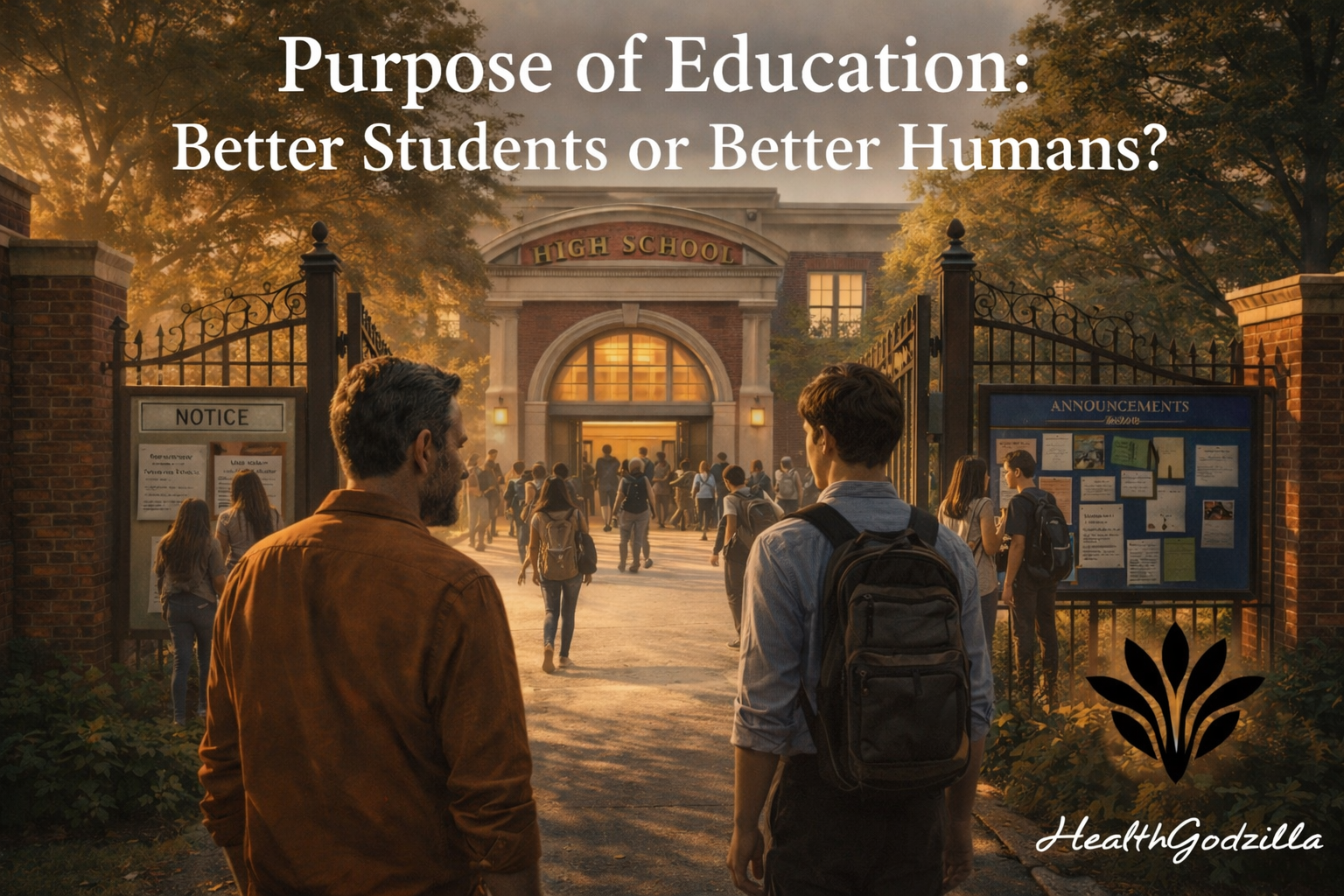
The school gate stood like a mouth that never stopped speaking—
bell after bell, shoe after shoe, homework after homework, question after question.
That morning, the quiet campus seemed to be holding one older than the buildings themselves—the purpose of education.
Outside, the afternoon sun leaned low and tired, as if it had spent all day watching children become numbers.
The gate kept swallowing names.
A few boys sprinted past, laughing like they had stolen something precious.
A girl walked slower, holding her bag tight against her ribs, as if it contained not books but verdicts.
Near the gate, a noticeboard carried yesterday’s announcements and tomorrow’s pressure—attendance warnings, exam routines, and a list of “top achievers” pinned like trophies.
Selene paused under the shade of a maple tree.
He looked at the board, then at the faces passing by—bright, restless, careful, defeated, hungry.
His father stood beside him, hands folded behind his back, wearing that professor-stillness that made silence feel like a lecture.
Selene spoke first, as always.
“Father…”
“Mmm?”
“Is education supposed to make better students… or better humans?” Do you think schools ever stop to ask about the purpose of education itself?
His father didn’t answer immediately.
He watched a boy step out of the gate, glance at the ranking list, and then look away as if the paper had slapped him.
“Tell me,” the professor said softly, “why did that question come now?”
Selene followed his gaze.
“Because that boy just learned something,” Selene said gently. “But it wasn’t math.”
His father’s mouth curled into a half-smile, not amused—more like recognizing an old wound. In fact, most reforms debate methods, funding, or rankings. Far fewer ask the deeper question: what is the purpose of education?
“Ah,” he murmured. “The hidden syllabus.”
They walked a little, the dust rising under their steps like quiet chalk.
Selene spoke again. “We say education builds futures. But sometimes it looks like it breaks people into categories—smart, average, weak. Like… we slice childhood into ranks.”
His father nodded once. “In many systems, measurement is confused with meaning.”
Selene tilted his head. “Then what is meaning?”
The professor glanced back at the gate. The bell rang again, sharp and metallic, like a spoon tapping glass.
“Meaning,” he said, “is what remains when the exam ends. Afterward, life begins asking its own questions.”
Soon after, a group of children spilled out like a river released.
Some carried their books carelessly.
Some clutched them like shields.
Selene’s eyes softened. “I keep thinking… if education trains them to fear mistakes, what happens when life demands courage?”
His father looked at him, and the air between them warmed—not with certainty, but with attention.
“You’re touching the nervous system of modern schooling,” he said—the place where learning becomes performance. Perhaps the real debate has never been about curriculum, but about the purpose of education we quietly serve.
Selene’s eyebrows lifted. “Performance?”
“Look at that board,” his father said calmly, nodding toward the list. “It doesn’t only record scores. It teaches what should be worshipped.”
Selene stared at the names. Then he exhaled.
“So the child isn’t only learning algebra,” he said. “They’re learning how to be seen. At the same time, they’re learning how to hide.”
“And how to avoid being seen,” his father added.
A breeze passed through the maple leaves, whispering like gossip from another century.
Selene’s voice lowered. “Perhaps that’s why so many adults keep chasing gold stars? Even at forty?”
His father chuckled gently—then let the chuckle fade before it became comfort.
“Yes,” he said. “Many people leave school, but school doesn’t leave them.”
For a moment, they stood still.
A stray dog slept by the gate, unbothered by ranks or routines, dreaming its simple dog-dream.
Selene smiled at the dog. “At least, that dog might be the wisest student here.”
“Possibly,” the professor said. “He hasn’t learned to confuse worth with comparison.”
Selene turned back to his father. “So… if we wanted education to make better humans, what would it look like?”
His father looked up, as if the sky itself carried an old curriculum.
“It would look like a place where a child can fail without losing dignity,” he said.
“A place where movement isn’t treated as distraction, and questions aren’t treated as rebellion.”
“A place where teachers don’t only deliver lessons— they build climates.”
Selene repeated the phrase, tasting it. “Climates.”
“Yes,” his father said. “After all, every classroom has weather.”
Selene glanced at the gate again.
“And what is the weather here?” he asked.
His father didn’t answer right away.
A girl stepped out, looked at the board, then at her own hands, as if counting invisible mistakes.
“Here,” the professor said finally, “the weather changes depending on who you are.”
Selene’s face tightened. “That’s… unfair.”
His father nodded. “It is also common.”
Indeed, many adults still carry those classroom echoes.
The bell rang again, and the school gate swallowed the next wave of children like a tide reversing.
Selene’s voice softened.
“Father,” he said, “if the purpose of education is the purpose of being human… then why do we keep teaching children to live like applicants?”
His father’s eyes narrowed with something like grief—then opened again into patience.
“Because,” he said, “historically, societies often build schools the way they build factories.”
Selene looked sharply at him. “Factories?”
“Yes,” his father said. “Input. Output. Efficiency. Sorting. Ranking. Passing. Failing.”
Selene’s lips parted as if he wanted to argue—then he didn’t.
He only watched the gate again, as if seeing it for the first time.
“And yet,” his father added, “even in factories, the best machines need care. They break if you only push them.”
Even then, Selene smiled faintly. “So we push children harder than machines.”
His father’s gaze stayed on the gate.
“Sometimes,” he said, “we do.”
For a moment, a pause arrived—quiet, heavy, but not hopeless.
Selene broke it.
“Then let’s walk,” he said. “Let’s follow this question until it finds its own shape.”
His father nodded, pleased—not with the question answered, but with the question alive.
“Alright,” the professor said. “But remember, Selene—this is not an argument. Instead, it’s a journey.”
Selene looked once more at the ranking list, and then at the children vanishing down the road.
“A journey,” he echoed. “To figure out whether we’re raising students… or raising humans.”
And as they began to walk, the school gate remained behind them—
still open, still speaking, still turning childhood into a procession of outcomes.
Ultimately, somewhere between the maple tree and the dusty road, another education had already begun:
the education of asking.
II. When Learning Becomes Performance
They walked away from the gate. Consequently, the noise thinned behind them—as if the bell’s voice couldn’t follow beyond a certain distance.
Meanwhile, a narrow road curved past a coffee shop and a stationery store where red pens hung like tiny verdicts. Beside it, a test-prep academy glowed with fluorescent light even in daylight—posters of perfect SAT scores smiling too widely, as if victory required teeth.
Selene slowed, reading the poster without meaning to. Soon after, his father noticed.
“Still listening to the hidden syllabus?” the professor asked.
At the same time, the question walked with them.
Selene gave a small laugh. “It’s loud.”
“Exactly,” his father said. “Now, let’s name it.” In other words, they had reached the heart of the matter. In fact, the conversation had already begun before either of them noticed.
Then they stopped near a low wall where someone had scribbled arithmetic in chalk—half-erased, half-praying to be remembered.
Selene leaned his elbows on the wall. After a moment, he said, “You said learning becomes performance.”
“Yes,” his father replied. “And it happens quietly, usually with good intentions.”
Selene turned his face toward him, moonlit-grace replaced by daylight seriousness.
“How?”
Next, his father pointed with his chin toward the coaching center. “That place is one way. However, it starts earlier than that.”
For a moment, Selene waited.
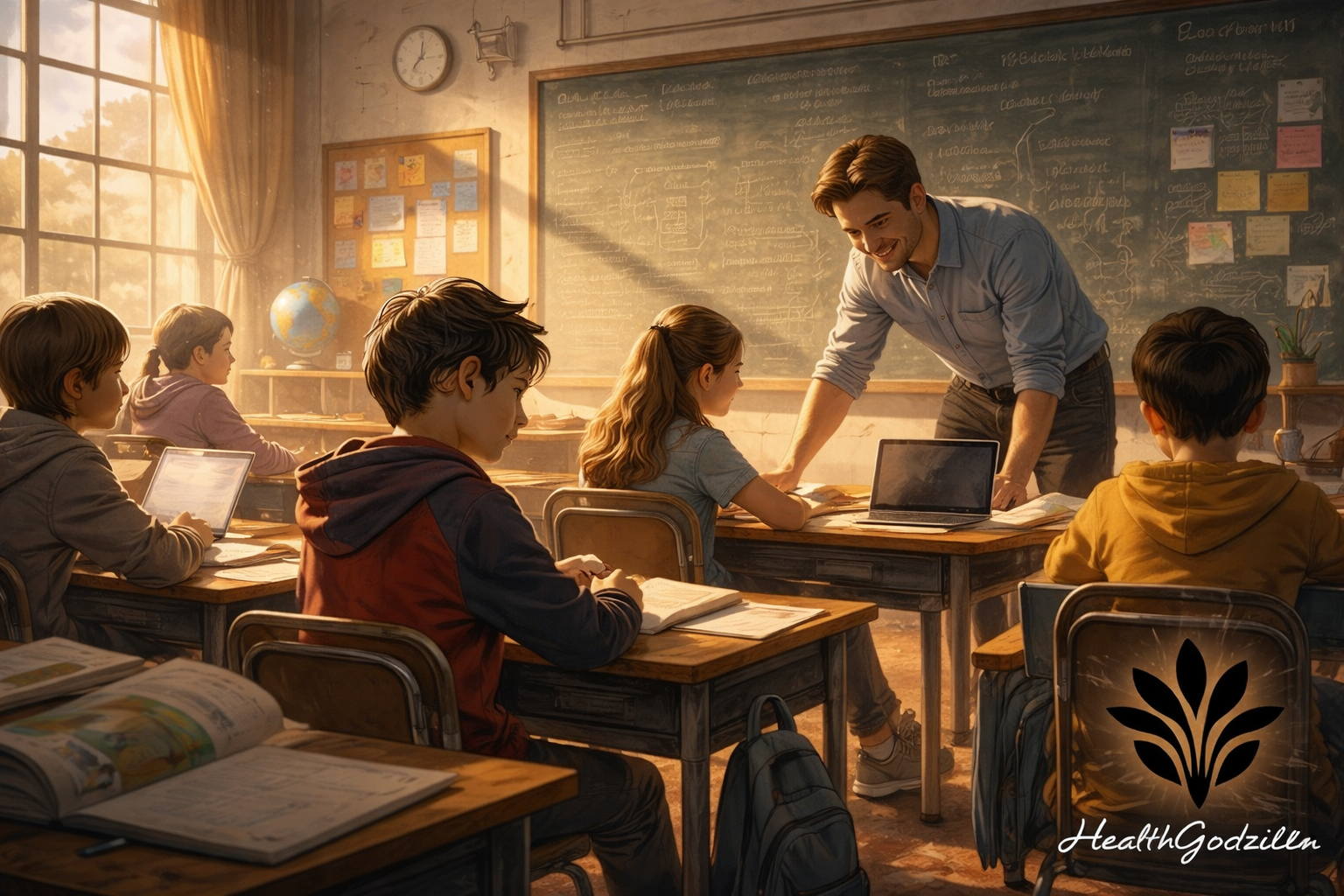
“Consider two rooms,” the professor began. “In one room, a child hears, ‘Let’s see what you understand. Mistakes are clues.’ In the other, the child hears, ‘This proves how smart you are.’”
Selene nodded slowly. “Same subject. Different weather.”
Similarly, the same lesson can feel safe or threatening. Therefore, the difference wasn’t the lesson—it was the atmosphere.
“Precisely. The first room is learning. By contrast, the second room is audition.”
Selene’s lips tightened. “Audition for what?”
“For worth,” his father said, as if the word was heavier than the others.
A bicycle bell rang somewhere down the road. At the same time, a schoolbag brushed past them like a small comet.
Selene spoke softly. “So judgement makes learning dangerous?”
“It can,” the professor said. “Not because evaluation is evil, but because the meaning attached to evaluation can poison the mind.”
Selene frowned. “But how does a child interpret it?”
To answer that, his father’s eyes lifted, as if he could see classrooms through walls.
“Children listen with their nervous systems,” he said. “Not only with their ears. If feedback feels like a threat, the brain doesn’t treat it as information. Instead, it treats it as danger.”
For a second, Selene blinked. “So the body decides first.”
“Always,” his father replied after a pause. “In other words, psychological safety isn’t a luxury. It’s a prerequisite. Because if fear dominates the classroom, the purpose of education quietly shifts—from growth to protection.”
Selene repeated the phrase, quieter. “Psychological safety.” Without it, learning turns defensive.
“Yes,” the professor said. “A child must feel safe enough to not know.”
Selene looked toward the stationery shop again. The red pens swayed gently, as if nodding in agreement.
“And when they don’t feel safe?” Selene asked, more curiously now.
“Then curiosity becomes caution,” his father said. “Eventually, learning becomes a performance designed to avoid shame.”
Selene’s jaw tightened. “So a student studies to not be humiliated.”
“Or to not disappoint,” his father added. “Or, at times, to not lose love.”
The air between them shifted—less academic, more human.
After a pause, Selene exhaled. “That’s… terrifying.”
Still, his father nodded once. “It is also common. Unfortunately, it happens more often than we admit.”
They walked again, slower now, as if their steps were careful not to break the thought.
Eventually, Selene said, “But teachers must grade. Schools must test. How can we avoid turning it into a theatre?”
“In that case,” his father replied gently, “the language of feedback becomes crucial.”
Softly, his father smiled. “By changing the kind of feedback we give. For example, the words adults choose shape the climate quickly.”
Selene glanced at him. “You mean ‘good job’?”
The professor chuckled. “Sometimes that is the beginning of the trap.”
Meanwhile, Selene looked offended on behalf of compliments. “But encouragement matters.”
“Of course it does,” his father said. “Still, there’s a difference between encouragement and judgement—between coaching and scoring.”
Selene crossed his arms. “Define it.”
His father held up two fingers.
“First,” he said, “judgement evaluates the person: You are smart. You are weak.
Second, coaching evaluates the process: Try this strategy. Your reasoning is improving. Your effort is sharpening your skill.”
Slowly, Selene nodded. “So judgement pins identity. Coaching moves behavior.”
“Exactly,” the professor said. “Moreover, coaching keeps the door open. Above all, it keeps identity separate from performance.”
Selene looked down at the chalk arithmetic on the wall, then nodded slowly. “Then the purpose of education isn’t proving intelligence—it’s developing it.”
“That chalk isn’t ashamed it got erased,” he murmured. “It just waits to be written again.”
His father’s smile deepened. “That’s a good metaphor. A learning culture treats mistakes like chalk—temporary, useful, revisable.”
Selene nodded. “Exactly. That is the purpose of education at its healthiest. Likewise, progress becomes visible and revisable.”
Selene looked up. “But a test culture treats mistakes like scars.”
“Yes,” his father said simply. In contrast, a test culture remembers every mark.
A bus passed, coughing smoke and impatience. For a moment, their conversation felt like a quiet room carried inside a noisy world.
Selene asked, “Is there evidence for this, beyond philosophy?”
Naturally, his father’s eyes brightened—professor-spark.
“There is,” he said. “Researchers have studied feedback styles and motivation for decades. They found that when learners feel judged, they avoid risk. As a result, confusion gets hidden, and easier tasks become safer choices. Meanwhile, when they feel coached, they attempt harder work and persist longer.”
Selene frowned. “So judgement shrinks the mind.”
“Not the mind itself,” his father corrected gently. “Rather, the behavior of the mind. It becomes defensive.”
Selene tilted his head. “And the system… encourages defence.”
“Sometimes,” his father said. “Especially when grades become the only language a school speaks. Otherwise, numbers begin to replace conversations.”
Eventually, they stopped at the edge of a small field where children played football barefoot, their laughter loose and fearless.
Meanwhile, Selene watched them. “They’re learning without permission.”
His father followed his gaze. “Notice something.”
Selene squinted. “No one is grading them. Notably, no one needs permission to improve.”
“Exactly,” the professor said. “So they take risks. They try. They miss. Then they try again. They don’t call it failure—instead, they call it play.”
Selene smiled. “So play might be closer to the purpose of education than exams are.”
Then he added, “Play might be the purest form of learning. In fact, no scoreboard is required for effort.”
His father nodded. “And yet, many schools treat play like a distraction.”
Selene turned back to him. Eventually, the question became impossible to ignore. “So when did school become a test hall?”
Quietly, his father looked toward the coaching center again, its lights still burning like a restless idea.
“Gradually,” he said. “As societies began to treat education as sorting. Soon, competition replaced curiosity. Eventually, adulthood began earlier than it should.”
Selene’s face softened. Consequently, even teachers become trapped.
“Yes,” his father said. “Teachers also live under evaluation. They, too, get judged by numbers. So sometimes they teach as they are treated.”
For a moment, Selene paused. “So the teacher’s fear becomes the student’s fear.”
The professor didn’t answer right away. Instead, he watched the children playing—each one missing goals and laughing anyway.
“Sometimes,” he said finally, “a classroom is not just a room. It’s a mirror. It reflects the system’s beliefs about humans.”
Selene’s voice lowered. “Then a system that believes humans are rankings… creates ranked humans.”
His father nodded. “And a system that believes humans can grow… creates climates where growth can breathe.”
Selene looked back toward the school gate in the distance, barely visible now.
“Then,” he said, “maybe our question isn’t only what children should learn.”
His father raised an eyebrow. “Go on.”
Selene spoke slowly, as if carving the sentence out of air.
“Maybe the real question is what kind of fear schools are teaching—and what kind of courage they’re forgetting to teach.”
His father’s eyes softened—not because Selene was correct, but because Selene was alive inside the question.
“Good,” the professor said. “Now we can go deeper.”
Ultimately, every system must decide what version of the purpose of education it wants to defend.
Soon, they walked on. Meanwhile, the coaching center lights kept shining behind them—like a reminder that performance is always nearby, waiting to borrow the face of learning.
III. The Nervous System of a Classroom
After a while, the road widened into a quieter street, where the trees looked unbothered by report cards.
Nevertheless, Selene’s mind stayed near the gate—as if the bell had followed them invisibly, ringing inside his ribs.
“So psychological safety,” he said at last, “isn’t a slogan.”
His father nodded. “Exactly. After all, it’s physiology wearing a moral costume.”
Selene frowned, half-amused. “You make everything sound like a body.”
“Because it is,” the professor replied. “Even when we talk about ideas, the nervous system votes first.”
Then he slowed, as if he didn’t want the next sentence to land like a sermon.
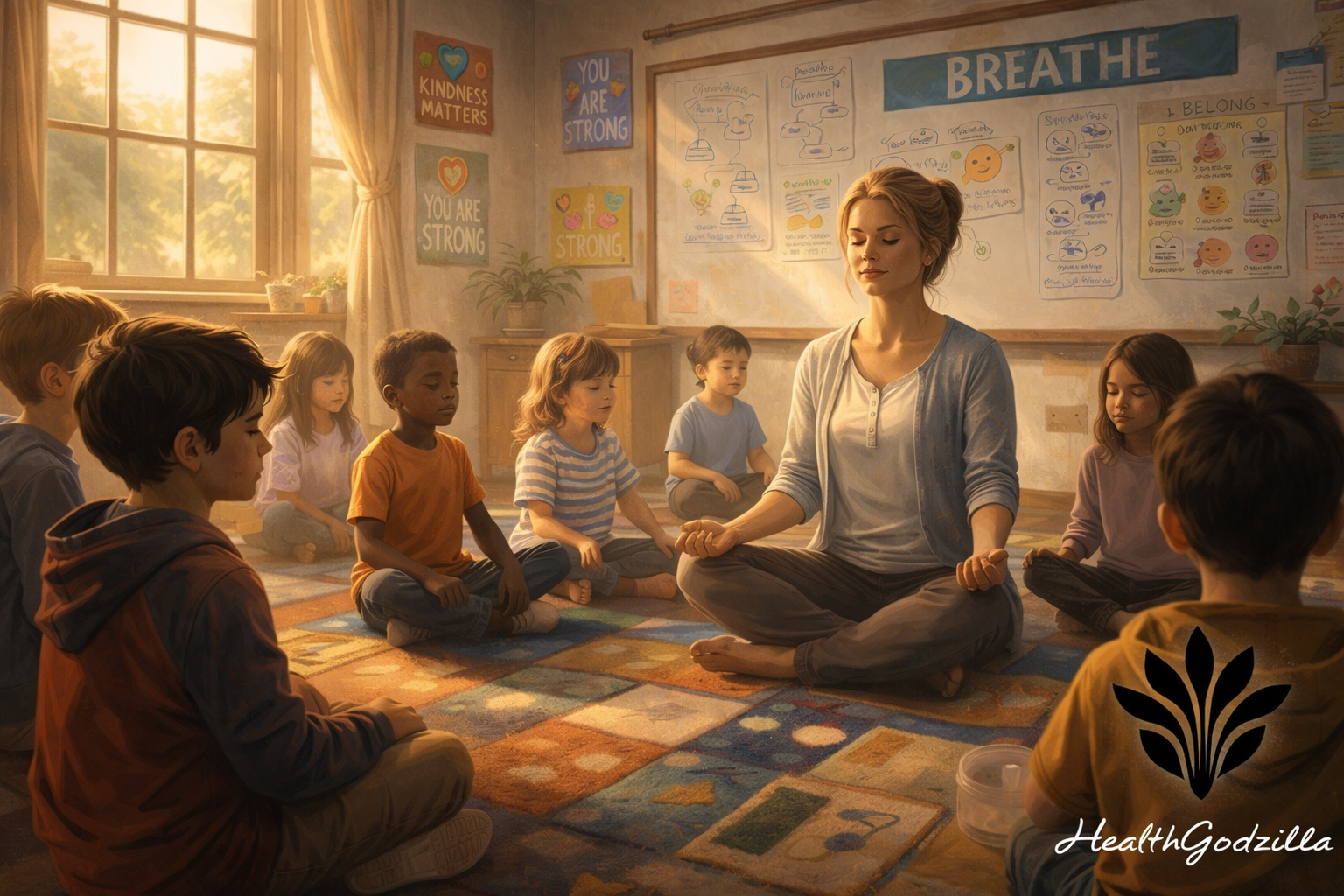
“Consider what happens when a child hears feedback,” he said. “If the message feels safe, the brain stays curious. However, if the message feels threatening, the brain becomes a guard dog.”
Selene pictured it and chuckled softly. “So learning gets escorted out of the building.”
“In a way, yes,” his father said. “Because fear narrows attention. As a result, the student starts hunting for danger instead of meaning.”
Meanwhile, a sparrow hopped near their feet, fearless in its small kingdom.
Selene watched it. “And schools call that focus.”
“Unfortunately,” his father said, “many systems reward the appearance of focus—quiet compliance—rather than the real thing: engaged thinking.”
In that case, Selene’s voice lowered. “So a classroom can teach fear without mentioning fear.”
“Precisely,” the professor replied. “It teaches it through tone, pacing, punishment, sarcasm, even silence.”
After that, he added, “And it teaches safety the same way—through patience, clarity, and the simple permission to be unfinished.”
Selene looked at him. “Permission to be unfinished… that sounds like mercy.”
“It is,” his father said. “Still, it isn’t softness. Rather, it’s strategy. Without it, the mind becomes a performer, not an explorer.”
Selene kicked a pebble and watched it roll. “Then the purpose of education changes again.”
“Yes,” his father replied. “Gradually, the purpose of education gets reduced to survival inside a system—avoiding shame, chasing approval, staying invisible.”
For a moment, Selene didn’t speak.
Instead, he asked, “How do we know when a classroom is safe?”
At that point, his father smiled, this time without irony. “Watch the mistakes.”
Momentarily, Selene blinked. “The mistakes?”
“Yes,” the professor said. “In fact, in a safe room, mistakes walk out in daylight. In contrast, in an unsafe one, they hide in the basement.”
Selene laughed once. “So the basement fills up.”
“Exactly,” his father said. “Then the student starts protecting their image more than their understanding.”
Selene’s face tightened. “And adults call that ‘maturity.’”
“Sometimes,” his father replied. “However, it’s often just fear with better grammar.”
Meanwhile, the wind shifted, and the trees made a soft, shushing sound—like they were tired of rankings, too.
Therefore, Selene looked ahead. “Then if we want better humans, we need classrooms where courage is practiced.”
“Yes,” the professor said. “Moreover, courage can’t be taught only through speeches. It grows through repeated safety—small risks taken, small recoveries earned.”
Selene nodded slowly. “So the nervous system learns hope the way it learns fear—through repetition.”
“That’s the point,” his father replied. “Therefore, the real curriculum isn’t only what we teach. It’s what the room teaches while we teach.”
Selene exhaled, as if he had been carrying something since childhood and only now noticed the weight.
“Then,” he said quietly, “maybe the first lesson of education should be: you are allowed to not know.”
His father didn’t rush to answer. Instead, he let the silence agree for him.
“Yes,” he said at last. “Because when a child can say ‘I don’t know’ without fear, learning finally becomes what it was meant to be—alive.”
IV. The Forgotten Half of Education
After some time, the pavement opened into a small public square where children were scattered across sunlight instead of desks.
Meanwhile, a group of younger students chased each other in loose circles, inventing rules as they ran. Nearby, an older boy balanced on a low wall, arms stretched like an amateur tightrope walker—concentration written across his face.
Selene slowed again. “They look different here.”
“They are,” his father replied. “Because no one is ranking them right now.”
For a moment, they simply watched. Meanwhile, the square continued teaching without a syllabus. As a result, the air felt lighter—less measured, more alive.
Then Selene asked, “Why does this feel more like learning than the classroom?”
His father smiled. “Because education was never meant to be only intellectual. Historically, the purpose of education included the body, the community, and the shaping of character—not just the accumulation of information.”
Selene tilted his head. “But schools focus on the mind.”
“They focus on a fraction of it,” the professor corrected gently. “In contrast, human development is whole. It involves movement, belonging, dialogue, conflict, cooperation, and imagination.”
A child tripped while running, paused, laughed, and got up without ceremony.
“Notice that,” his father said quietly. “Falling did not threaten identity.”
Selene nodded. “Because no one was grading the fall.”
“Exactly,” his father replied. “Yet in many classrooms, even intellectual mistakes feel like moral failures. Consequently, the body tightens, and curiosity retreats.”
Then they resumed walking, though more slowly now.
“Global education frameworks,” his father continued, “often remind us that learning is not only about test scores. Instead, it includes well-being, civic participation, social cohesion, and lifelong engagement.”
Selene looked thoughtful. “So the purpose of education isn’t just producing workers.”
“No,” his father said. “Rather, it is preparing humans to live with other humans.”
A group of teenagers sat in a circle nearby, arguing animatedly about something neither adult could hear. Nevertheless, their gestures suggested ownership—voices rising, hands moving, disagreement without collapse.
“That,” the professor said, nodding toward them, “is citizenship rehearsing itself.”
Selene watched. “And we don’t test that.”
“Rarely,” his father agreed. “After all, belonging is harder to quantify than algebra.”
For a while, they walked without speaking. Eventually, the silence began to clarify the question rather than hide it.
Soon, Selene broke the silence. “Can a human thrive sitting still all day?”
His father exhaled slowly. “Biologically? Not really. Psychologically? Even less.”
“So when we ignore movement,” Selene continued, “we ignore part of being human.”
“Precisely,” his father said. “And when we ignore belonging, we weaken resilience. Furthermore, when we ignore civic voice, we shrink democracy.”
Meanwhile, the square buzzed with layered sounds—laughter, argument, footsteps, the rhythmic thud of a ball against pavement.
Selene looked around. “None of this appears on a report card.”
“Yet all of it shapes adulthood,” his father replied. “Therefore, when we reduce education to performance metrics, we amputate the invisible half.”
Selene’s face grew serious. “Then perhaps the forgotten half is the part that makes us human.”
In fact, his father did not disagree.
“The purpose of education,” he said carefully, “cannot be fulfilled by intellect alone. Instead, it must include physical vitality, social trust, ethical imagination, and the courage to participate.”
Gradually, Selene absorbed the sentence.
“So when schools neglect the body and community,” he said, “students may succeed academically but struggle existentially.”
“Sometimes,” his father answered. “And at times, they carry invisible loneliness into adulthood.”
The wind lifted a few dry leaves across the square, scattering them without hierarchy.
Selene watched them drift. “Then maybe education should feel more like this square.”
His father smiled faintly. “Perhaps. Or at least it should remember that humans are not brains on chairs.”
For a brief moment, neither of them spoke. In that pause, the square seemed wiser than any classroom.
Then Selene asked, quietly, “If the forgotten half matters so much, why did we forget it?”
V. The Praise Trap Begins at Home
After leaving the square, they passed a row of houses where windows were beginning to glow with early evening light.
Meanwhile, inside those homes, another classroom was quietly in session.
Selene broke the silence. “If schools reward performance, where does it start?”
His father did not hesitate. “Often, at home.”
Selene looked surprised. “But parents just want to encourage.”
“Of course,” the professor replied. “However, encouragement has flavors. Some nourish growth. Others feed fragility.”
A car door shut somewhere nearby. Laughter drifted from a porch.
“Consider this,” his father continued. “When a child hears, ‘You are so smart,’ what exactly are they learning?”
Selene thought for a moment. “That intelligence is fixed?”
“Precisely,” his father said. “Research in motivational psychology suggests that praising innate ability can unintentionally tie identity to outcome. As a result, children begin protecting the label instead of exploring difficulty.”
Selene frowned. “So success becomes something fragile.”
“In many cases, yes,” the professor replied. “Because if being ‘smart’ defines you, then struggling threatens you.”
They walked past a house where a parent was gently correcting homework at the kitchen table.
“Now compare that,” his father added, “to saying, ‘You worked hard on that,’ or ‘That strategy helped.’ In contrast, process-based feedback separates the person from the performance.”
Selene nodded slowly. “So one builds identity. The other builds skill.”
“Exactly,” his father said. “Furthermore, studies show that children praised for effort are more likely to choose challenging tasks later. Meanwhile, those praised for intelligence often avoid situations where they might fail.”
Selene’s voice softened. “So the fear of failure begins before the first exam.”
“Sometimes,” his father answered. “And sometimes the ‘good student’ identity forms long before adolescence.”
A porch light flickered on as dusk settled more firmly.
“That identity feels rewarding at first,” the professor continued. “However, over time, it can become a cage. The child learns to perform competence instead of building resilience.”
Selene exhaled. “So praise can accidentally teach fear.”
“Yes,” his father replied. “Because when approval becomes the goal, curiosity becomes secondary.”
They paused at a crosswalk, waiting for the light to change.
“In that case,” Selene said quietly, “the purpose of education gets distorted before school even begins.”
His father nodded. “Exactly. If children equate worth with praise, they carry that equation into classrooms, workplaces, relationships.”
Cars passed. The signal shifted.
“So what should parents do?” Selene asked.
His father smiled faintly. “Perhaps the same thing teachers should do. Emphasize process. Normalize struggle. Separate love from performance.”
Selene looked thoughtful. “That sounds simple.”
“It is simple,” his father said. “Nevertheless, it is not easy. Because adults also fear failure.”
For a moment, the idea hung between them like a mirror.
“So the praise trap,” Selene murmured, “isn’t about children alone.”
“No,” his father said. “It reflects adult anxieties projected downward.”
Gradually, the evening deepened.
“If we want the purpose of education to be human development,” his father continued, “then we must begin where identity begins—at home.”
Selene nodded once more. “So before report cards, before rankings, before universities… there is language.”
“Yes,” the professor said. “And language quietly shapes the climate of becoming.”

VI. Systems That Measure Everything — Except Growth
By the time they reached the main road, traffic had thickened. Buses moved with mechanical patience, stopping, starting, calculating space.
Likewise, education systems move through their own traffic of numbers—enrollment rates, completion percentages, standardized scores, comparative rankings.
Selene spoke first. “So if praise shapes identity, and classrooms shape courage… what shapes the classroom?”
In fact, his father did not look surprised. “Systems.”
After all, teachers rarely operate in isolation. They respond to incentives, accountability frameworks, inspection regimes, funding formulas. Consequently, what gets measured quickly becomes what gets prioritized.
Selene nodded. “So data decides the atmosphere.”
“Not intentionally,” his father corrected gently. “However, when performance indicators dominate policy conversations, human development becomes secondary.”
Meanwhile, a digital billboard flickered above them, displaying numbers in relentless rotation.
“Consider global education reports,” the professor continued. “They track literacy rates, numeracy benchmarks, school access, budget allocations. All of that matters. Nevertheless, very few indicators measure belonging, ethical reasoning, or long-term resilience.”
Selene’s brow tightened. “Because those are harder to quantify.”
“Exactly,” his father said. “Yet difficulty does not justify neglect.”
For a moment, they walked beside a construction site where steel rods stood exposed like unfinished thoughts. Nevertheless, the structure rising there felt more honest than some policies.
“Many systems,” the professor added, “collect vast amounts of data. However, data collection is not the same as data use. In fact, some countries accumulate statistics without building the capacity to interpret or act upon them.”
Selene looked curious. “So measurement becomes performance too?”
“Sometimes,” his father replied. “In certain contexts, reporting replaces reform. Meanwhile, schools adapt strategically to metrics rather than to students.”
A truck rumbled past, briefly drowning their voices.
“If test scores determine funding,” Selene said once the noise passed, “then schools will chase test scores.”
“Precisely,” his father answered. “Therefore, curriculum narrows. Creative risk declines. Teaching becomes defensive.”
Selene thought about the square they had left behind.
“So the forgotten half,” he said slowly, “gets squeezed out by dashboards.”
“In many cases, yes,” the professor replied. “Because governance systems prefer what can be compared across regions. In contrast, growth unfolds unevenly and resists standardization.”
The evening air carried the faint smell of dust and fuel.
“Moreover,” his father continued, “middle-tier governance often struggles most. Policies may look strong at the national level. Yet implementation gaps appear locally—limited training, weak feedback loops, insufficient support for teachers.”
Selene absorbed that. “So reform is announced loudly… but lived quietly.”
“Exactly,” his father said. “And when reform focuses narrowly on measurable outputs, the purpose of education quietly contracts.”
Eventually, they stopped at a red light.
“If we can measure reading speed,” Selene asked, “but not empathy… do we slowly forget to nurture empathy?”
His father did not answer immediately.
Instead, he watched a young child help an older woman cross the street while cars waited.
“Measurement is necessary,” he said finally. “However, it is incomplete. The danger begins when incomplete tools define complete humans.”
The light turned green.
“So the system is not evil,” Selene concluded. “It is just narrow.”
“Often,” his father agreed. “And unless we widen our definition of success, we risk mistaking compliance for growth.”
Shortly afterward, traffic resumed, orderly and impatient.
“Then perhaps,” Selene said, “the real reform question isn’t only how to improve scores.”
His father glanced at him. “Go on.”
“Perhaps the deeper question is this: what are we unwilling to measure—because it would expose how narrow our understanding of the purpose of education has become?”
VII. Teachers: The Hidden Architects of Inequality
Eventually, the traffic thinned, and the noise softened into something almost breathable.
Nevertheless, Selene’s thoughts were no longer on systems alone.
“If systems shape classrooms,” he asked quietly, “who shapes the climate inside them?”
Without hesitation, his father answered. “Teachers.”
After all, policies may design frameworks. However, teachers translate frameworks into lived experience. Consequently, the tone of a classroom often reflects the beliefs of the person standing at the front.
Selene considered that for a moment. “Beliefs about what?”
“Beliefs about intelligence,” his father said. “About potential. And ultimately, about who is allowed to grow.”
Meanwhile, a row of streetlights flickered on as dusk leaned fully into evening.
“Research in educational psychology,” the professor continued, “suggests that teacher expectations subtly shape student outcomes. In fact, when teachers communicate high standards alongside genuine belief in students’ capacity to meet them, achievement gaps often narrow.”
Selene nodded slowly. “So belief becomes performance.”
“Not performance,” his father corrected gently. “Rather, possibility.”
For a moment, neither of them spoke. Instead, the silence seemed to underline the weight of the word.
“However,” the professor added, “the opposite is also true. When expectations are quietly lowered for certain groups, inequality reproduces itself without announcement. Over time, those lowered expectations harden into structure.”
Selene’s expression tightened. “So the classroom can widen gaps even without intention.”
“Exactly,” his father replied. “Because climate is cumulative. Tone compounds. Micro-signals accumulate. Gradually, patterns become norms.”
A cyclist passed them, weaving between parked cars with careful confidence.
“Consider belonging,” his father continued. “When students feel respected and seen, engagement rises. Conversely, when they feel stereotyped or dismissed, participation declines—even if curriculum remains unchanged. In other words, perception shapes performance.”
Selene absorbed that quietly.
“So inequality isn’t only economic,” he said. “It’s relational.”
“Yes,” his father agreed. “And relationships are shaped daily—through feedback, patience, eye contact, and fairness. Therefore, small gestures often carry disproportionate weight.”
Meanwhile, a classroom somewhere was ending its last lesson of the day.
“Teachers operate under pressure,” the professor said carefully. “Therefore, responsibility must be paired with support. Otherwise, responsibility turns into burden. Without training, reflection, and institutional backing, even well-intentioned educators default to survival strategies.”
Selene looked thoughtful. “So reform that ignores teachers misunderstands the system.”
“Precisely,” his father said. “Because the purpose of education is not implemented by documents. Instead, it is embodied by people.”
The night air cooled slightly. As it did, the conversation deepened.
“Moreover,” the professor continued, “teacher mindset influences how mistakes are treated, how effort is interpreted, and how struggle is framed. In turn, students internalize those interpretations.”
Selene’s voice lowered. “So if a teacher believes ability is fixed…”
“Then students learn that belief,” his father completed. “Even if it is never stated aloud. Eventually, it becomes self-expectation.”
A quiet passed between them.
“And if a teacher believes growth is possible?” Selene asked.
“Then resilience becomes contagious,” his father replied. “Gradually, classrooms become spaces where challenge signals opportunity rather than threat. As a result, effort feels meaningful rather than risky.”
Selene exhaled slowly. “So teachers are not just instructors.”
“No,” his father said. “They are climate engineers.”
For a brief moment, the phrase settled into the night air. Then, slowly, its implications widened.
“If that’s true,” Selene continued, “then supporting teachers may be the most powerful lever in redefining the purpose of education.”
His father nodded once. “And perhaps the most overlooked. Indeed, the system often reforms everything except the human center.”
VIII. Can One Education System Fit the World?
Eventually, the road curved toward a quieter neighborhood where houses differed in shape, color, and age.
Likewise, education systems differ across continents—shaped by history, economics, culture, and political imagination.
Selene broke the silence. “If systems narrow growth, and teachers shape climate… can one model really work everywhere?”
His father smiled faintly. “Historically, many have tried.”
Across nations, reforms travel quickly—standardized testing frameworks, accountability measures, global rankings, curriculum imports. Meanwhile, local realities often remain stubbornly specific.
Selene considered that. “So policy travels faster than culture.”
“Precisely,” his father said. “However, education lives inside culture. Therefore, systems that ignore local context frequently produce friction.”
A family passed them speaking a language Selene did not recognize.
“Consider this,” the professor continued. “In some societies, education emphasizes collective harmony.
Elsewhere, it prizes individual competition.
However, global metrics rarely distinguish between these philosophies.”
Selene nodded slowly. “So comparison becomes misleading.”
“Sometimes,” his father replied. “Because ranking nations assumes uniform goals. Yet the purpose of education may differ subtly across contexts.”
The evening air carried distant music from an open window.
“At the same time,” the professor added, “certain principles appear universal—safety, belonging, dignity, opportunity to grow.”
Selene looked thoughtful. “So not one system… but shared foundations.”
“Exactly,” his father said. “In practice, effective education adapts structure to culture while preserving human needs.”
For a moment, they walked beneath trees that had grown differently yet reached toward the same sky.
“Moreover,” his father continued, “knowledge exchange across borders can enrich systems. However, imitation without reflection often imports stress without importing wisdom.”
Selene exhaled. “So global reform requires humility.”
“Yes,” the professor replied. “Ultimately, no single blueprint can define the purpose of education for every culture. Nevertheless, universal human needs remain remarkably consistent.”
The houses around them stood quietly—different designs, shared foundations.
“Then perhaps,” Selene said slowly, “what truly travels across borders is not policy… but principles.”
His father nodded once. “And principles must always serve people, not the other way around.”
IX. The Universal Principles of Human Learning
By now, the road had grown quiet.
Streetlights hummed softly overhead, casting circles of pale certainty on uncertain ground.
Selene walked without speaking for a while. Eventually, he said, “If systems differ, cultures differ, teachers differ… what remains?”
His father did not rush the answer.
“Across classrooms, homes, and nations,” he began slowly, “certain needs appear again and again.”
Selene waited.
“Safety,” his father said first. “Not comfort—but the absence of humiliation.”
“Belonging,” he continued. “The sense that one’s presence matters.”
“Movement. Because the body is not an accessory to the mind.”
“Respect. Because dignity fuels risk.”
“And growth,” he finished. “The quiet conviction that change is possible.”
Selene absorbed each word as if it were a stepping stone.
“So the purpose of education,” he said carefully, “is not the production of performance.”
His father nodded once.
“Rather, the purpose of education is the cultivation of human capacity—intellectual, relational, ethical, and civic.”
A pause followed.
“Across policy debates,” his father added, “we argue about curriculum.
In households, we debate praise.
Meanwhile, systems measure outputs.”
Yet beneath all of it lies a simpler truth: humans learn best when they feel seen, safe, and capable of becoming.
Selene’s voice softened. “So the principles travel even when the systems change.”
“Exactly,” his father said. “Because while structures differ, nervous systems do not.”
The wind moved through the trees as if agreeing quietly.
“And teachers?” Selene asked.
“They carry those principles into practice,” his father replied. “Likewise, parents anchor them early. Meanwhile, systems either protect or distort them.”
Selene exhaled.
“Then perhaps,” he said slowly, “the question was never whether education should create better students or better humans.”
His father glanced at him.
“Go on.”
“Perhaps the real question is whether we remember that students are already humans.”
X. Epilogue — Better Students or Better Humans?
By the time they circled back toward the school, the night had settled fully.
The gate stood where it always had—metal, patient, unoffended by questions.
Earlier, it had swallowed names and returned numbers. Now, it rested quietly, as if it had never spoken at all.
Selene slowed.
Inside the courtyard, a janitor moved methodically beneath a dim light. Desks were stacked. Chalk dust settled into invisibility. The noticeboard still carried its list of “top achievers.”
For a moment, neither Selene nor his father commented.
After everything they had traced—performance, fear, praise, measurement, culture, belief—the gate no longer felt like an entrance or an exit. Instead, it felt like a mirror.
The purpose of education had not changed shape during their walk. However, their understanding of it had.
Somewhere inside those classrooms, children would return tomorrow carrying books, identities, expectations, and quiet questions of their own.
Meanwhile, systems would continue counting. Policies would continue adjusting. Parents would continue praising. Teachers would continue balancing belief and pressure.
Yet beneath the layers of structure and scorekeeping, something simpler remained—small hands learning to write, small voices testing courage, small minds reaching toward possibility.
Selene stood still.
His father did not interrupt the quiet.
The bell did not ring.
No conclusion arrived.
Only this remained:
Students were never separate from humanity.
And perhaps education was never meant to manufacture better versions of them—
but to remember what they already were.
The gate stood quietly.
The question of better students or better humans also opens toward the deeper question of the vocation of intellectual growth. If education helps the mind grow, then it must also ask what that growth is for, whom it may serve, and whether knowledge can become more capable without becoming less humane.

Hello, Artista
Later that evening, as if summoned by the quiet itself, Artista’s voice arrived across distance.
“Organum,” she said softly from Vancouver, “I read what you wrote. So tell me—are we raising performers or humans?”
Organum smiled, although she could not see it. “That depends,” he replied, “on what we reward first.”
Meanwhile, Whitee thumped somewhere in the background, and Brownie rustled like a small philosophical objection.
“Children begin curious,” Artista said. “However, somewhere between stickers and report cards, that curiosity becomes fragile.”
“Yes,” Organum answered. “At first, praise feels like sunlight. Yet when praise attaches to identity instead of effort, it casts a long shadow.”
Artista paused. “So the purpose of education is not applause?”
“Not applause,” he said. “Rather, awakening.”
Outside his Boston window, a dog barked once and then reconsidered.
“Still,” Artista continued, “parents want their children to succeed. Teachers want results. Systems want proof. Therefore, performance becomes the easiest language to speak.”
“True,” Organum said. “Nevertheless, what is easy is not always what is human.”
Artista laughed gently. “You’re circling it again.”
“Perhaps,” he admitted. “Because the purpose of education keeps hiding behind ambition.”
For a moment, neither spoke.
Then Artista said, “When my students make mistakes and don’t collapse — I see something sacred. In contrast, when they fear being wrong, the room shrinks.”
“Exactly,” Organum replied. “Psychological safety is not softness. Instead, it is strength without humiliation.”
“So maybe,” she said slowly, “the purpose of education is to protect courage.”
“And to practice belonging,” he added. “Because a child who feels they belong will risk growth.”
Meanwhile, the night deepened on both coasts.
“Organum,” Artista said, “if students are already human — what are we really shaping?”
He did not answer immediately.
Finally, he said, “We are shaping the conditions in which their humanity either contracts… or expands.”
Artista exhaled. “Then the work is smaller than we thought.”
“And larger,” he replied. “Because climate is invisible — yet decisive.”
Whitee thumped again, as if concluding the matter.
“So we keep asking?” Artista whispered.
“Yes,” Organum said. “We keep asking. After all, education is not a finished exam. It is a living relationship.”
Artista’s voice softened.
“Organum,” she said calmly, “I will share a story of an educator who unsettles me often. However, there is one condition — when I finish, you must remain silent. I do not expect any word from you after that.”
Organum nodded.
Artista began.
“You may know Abdullah Abu Sayeed, an educator in Bangladesh. Long ago, in a program, he shared an experience from his classroom.”
“He said that usually the ‘good’ students sit on the front benches. Meanwhile, the less studious ones occupy the back.”
“One day, during his lecture, news arrived that a nearby market had caught fire. There was a brief pause. Then he resumed teaching.”
“After some time, he noticed something strange. The front-bench students continued listening with steady attention. However, the back benches were suddenly empty.”
“He finished his class. Later, while working in his office, he learned that those backbenchers had left to help extinguish the fire.”
“So he made a decision. He gave them additional marks.”
Artista stopped.
Neither she nor Organum spoke.
The line remained open for a few seconds more.
Then, quietly, the connection cut.
Meanwhile, somewhere far from both cities, a school gate rested under moonlight.
Author’s Reflection
I began this piece thinking I was searching for an answer.
However, somewhere between the school gate and the football field, I realized something humbling: the question itself was slightly misplaced.
“Better students or better humans?” sounds sharp. Yet perhaps it assumes a separation that never existed.
Students are already human. Therefore, the real tension is not what we produce — but what we protect.
This may be the first time I have felt satisfied offering an answer, precisely because the answer dismantled the question.
In fact, much of modern schooling debates curriculum, metrics, reform, and technology. Nevertheless, beneath those layers rests something older and simpler: whether our systems remember the dignity, fragility, and courage of the child standing inside them.
If this reflection unsettles anyone slightly, that is not an accident. After all, growth rarely arrives through comfort alone.
I was not alone when I wrote this. Others spoke, and I listened.
Articles You May Like
From metal minds to stardust thoughts—more journeys await:
- Leadership Mindset Decision-Making: Psychological Roots and Organizational Impact
A father-son journey into how leadership mindset shapes authority, decisions, and a company’s rise—or quiet collapse. - Eco-Nutrition: Systems Diversity and Sustainable Diets
A reflective exploration of how biodiversity, food systems, and human health intertwine. From soil microbes to school lunches, this piece traces how diversity nourishes resilience—not only in ecosystems, but in culture and policy.
Curated with stardust by Organum & Artista, under a sky full of questions.
Principal Sources
The following works helped shape the perspective behind this story.
- Atkinson, A., Watling, C. J., & Brand, P. L. P. (2022). Feedback and coaching. European Journal of Pediatrics, 181, 441–446. https://doi.org/10.1007/s00431-021-04118-8
- Dweck, C. S. (2006). Mindset: The new psychology of success. Random House.
- Hecht, C. A., Murphy, M. C., Dweck, C. S., Bryan, C. J., Trzesniewski, K. H., Medrano, F. N., Giani, M., Mhatre, P., & Yeager, D. S. (2023). Shifting the mindset culture to address global educational disparities. npj Science of Learning. https://www.nature.com/articles/s41539-023-00181-y
- Jain, C., & Bergmann, J. (2026). Bridging data and decision-making in education: Evidence review—Exploring the role of the middle tier in low- and middle-income countries. UNICEF Office of Strategy and Evidence – Innocenti. https://www.unicef.org/innocenti/reports/bridging-data-and-decision-making-education
- UNESCO. (2015). International charter of physical education, physical activity and sport (SHS/2015/PI/H/14 REV.). https://www.unesco.org/en/legal-affairs/international-charter-physical-education-physical-activity-and-sport
Relevant sections were interpreted through a narrative and systems lens rather than cited exhaustively.
This article is also archived for open access on Zenodo: https://doi.org/10.5281/zenodo.18755094
Leave a Reply